10 Small Garden Design Ideas Layout
Ever stepped into your backyard, looked at the tiny patch of space, and wondered how you could fit flowers, a seat, and a path without bumping into everything? These small garden layout ideas start with the space you actually have, whether that’s a narrow side yard, a bare patio, or a shady corner. My favorite layout trick is to decide where you’d like to sit before you pick a single plant. Suddenly, you know where the path needs to go and which flowers you’ll get to enjoy up close.
In this article
- Follow a curved path to a bench
- Make an L-shaped border along the fence
- Give a narrow garden a straight route
- Turn a shady corner into a sitting nook
- Cluster flowerpots at different heights
- Use a trellis as a flowering wall
- Frame a small circular lawn with flowers
- Lay out four raised beds for a kitchen garden
- Break up a gravel garden with planted islands
- Divide a courtyard on the diagonal
Before you sketch, check these three things
A quick look at the yard will narrow down your options. Grab a tape measure and jot down what you see. These notes will help you spot layouts that fit your space and the way you use it.
- Sun and shade. Notice where the sun lands in the morning and late afternoon.
- Everyday access. Mark the doors, gates, and taps you need to reach.
- Usable space. Measure between fixed features such as steps, fences, and drain covers.
1. Follow a curved path to a bench
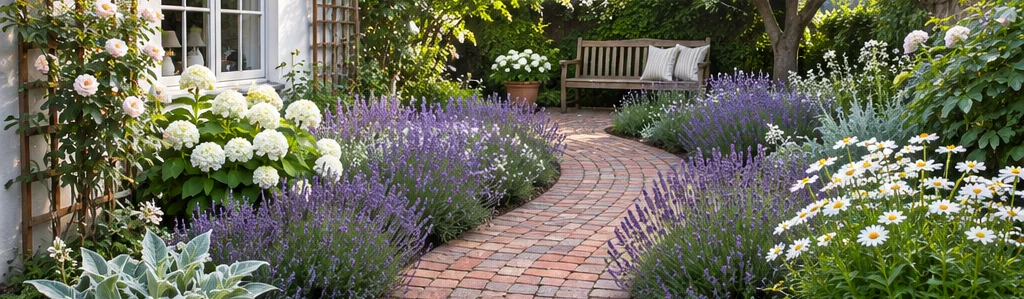
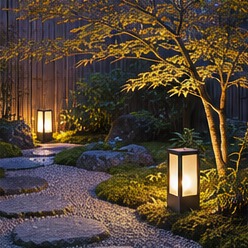
A gentle curve gives your eye something to follow, even if the walk only takes a few steps. Start the path near the back door and bend it around one generous planting bed. Set a bench at the far end, angled toward the flowers you want to see. If you can glimpse the seat from the door, you’ve already given yourself a reason to go outside.
Lay out the curve with a garden hose before buying any paving. Walk it with a watering can and see where you naturally step. A single broad bend usually feels comfortable in a tight garden, and low edging plants keep the corners from crowding your feet.
2. Make an L-shaped border along the fence
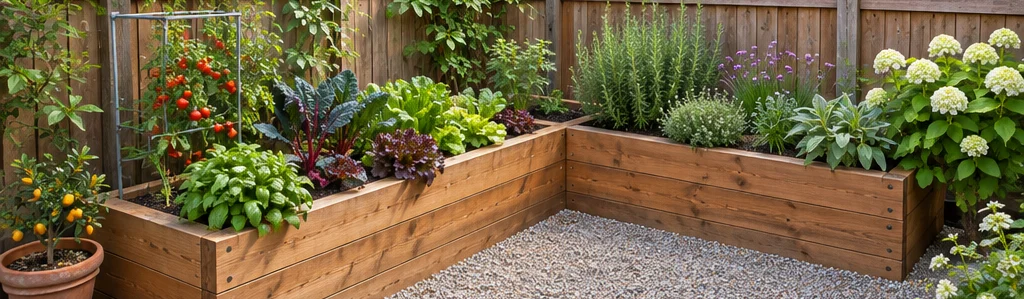
Got two bare fences that meet in a corner? Run a continuous bed along both to create an L-shaped border, then leave the center free for a table, play space, or a small patch of grass. You can build the border at ground level or use timber raised beds to give it a crisp edge. Make the corner slightly deeper if you have room for a larger shrub.
Repeat the same low flower along both sides to tie the beds together. Place taller plants toward the fence and choose their positions with mature widths in mind. If the two fences get different amounts of sun, repeat a flower color with different plants suited to each side.
3. Give a narrow garden a straight route
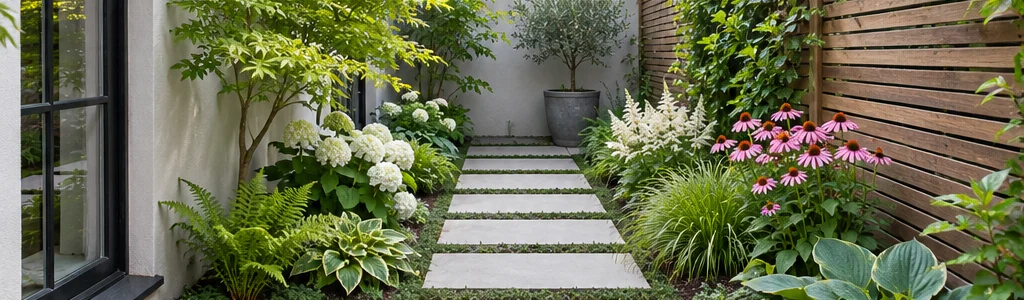
A long, narrow garden works especially well when you can see a clear route from one end to the other. Set a line of broad stepping stones down the center, with a shallow bed on each side. If one side already has a door or gate that needs clearance, shift the path toward it and give the opposite bed more depth. Add a large pot or a chair at the far end to draw the eye forward.
Choose compact plants whose foliage stays clear of the path as they grow. Try repeating one flower in groups instead of squeezing a different variety into every gap. FYI, you can test the spacing with cardboard cutouts before committing to any stone.
4. Turn a shady corner into a sitting nook
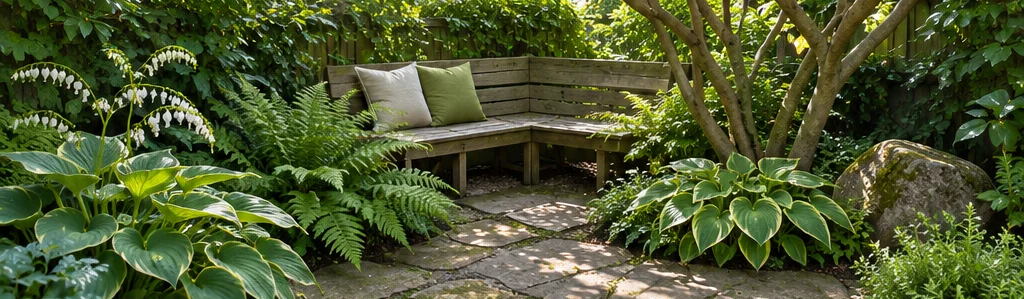
Where does the shade land when you actually want to sit outside? Watch it for a day before choosing your spot. Tuck a slim bench into that corner and extend a short paved or gravel landing in front so you can reach it after rain. Wrap the sides in plants and leave the view from the bench open.
For a shade garden, try layers of fern fronds and broad hosta leaves where they suit your climate. Add a few shade-tolerant flowers, such as begonias, where they’ll catch your eye from the seat. A plant with pale leaves near the bench can stand out even on an overcast day.
5. Cluster flowerpots at different heights
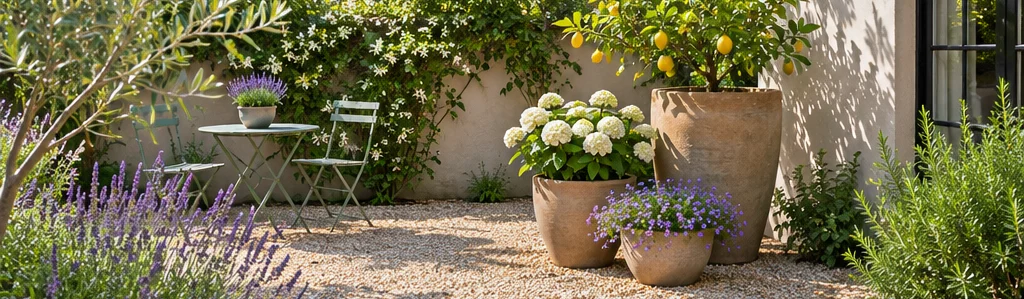
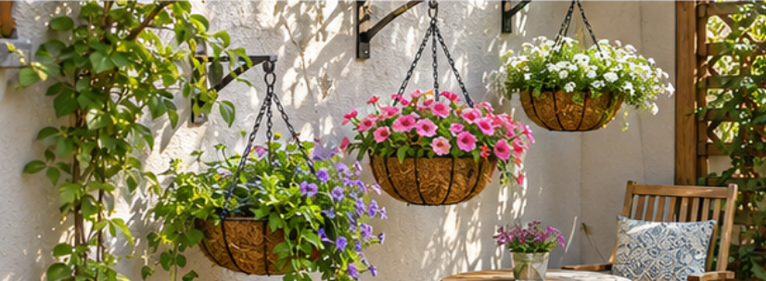
A container layout is handy when your garden is mostly paving or you want to change the planting with the seasons. Gather pots along one or two edges and keep the middle clear for walking. Use a tall planter at the back, a few medium pots in the middle, and a wide shallow pot in front. From the door, you’ll see flowers at every level.
Pick two or three pot finishes so the group feels connected. Put sun-loving flowers together where the patio gets enough light, then give thirstier plants their own containers so you can water them separately. If you’re gardening with flowers in pots, check for drainage holes before filling anything with soil.
6. Use a trellis as a flowering wall
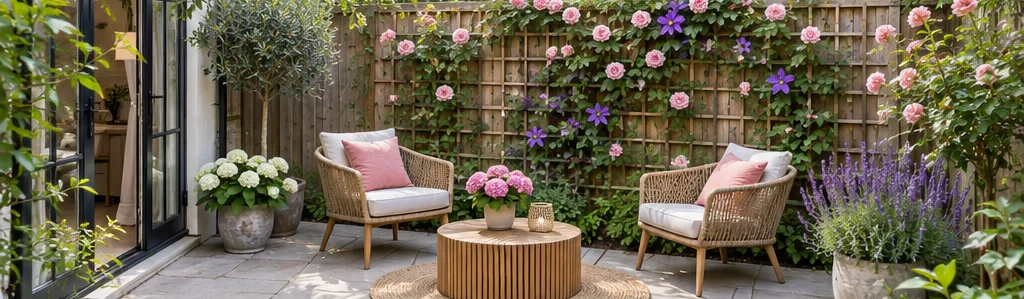
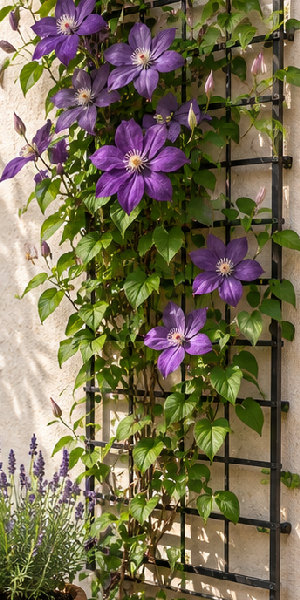
When the patio is already full, where can you plant next? Look at the fence beside your favorite seat. A trellis lets a flowering vine grow upward from a narrow bed or a roomy container. Put it where you’ll see the flowers from indoors as well as from the patio.
Choose a vine that suits your light and the size of the support. Sweet peas can give you a seasonal display in mild weather, while a suitable compact clematis can return year after year. Keep a little room around the base for watering and leave enough access to tie in new stems. Give the vine a chance to show off by keeping the pots nearby simple.
7. Frame a small circular lawn with flowers
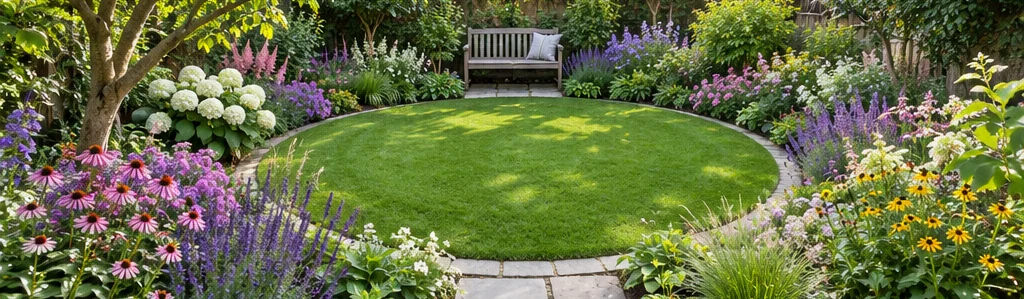
If you love a bit of grass underfoot, try a circular lawn with planting around the edges. Mark the shape with a hose and stand at the back door to see how it looks. Where the circle leaves extra space in the corners, make deeper beds for fuller planting. Keep the entry point open so you can walk straight onto the lawn.
Repeat the same flower color across opposite sides of the circle. Let a few plants spill gently toward the edge where they won’t complicate mowing. If the yard is more rectangular than square, stretch the circle into an oval and keep the same planting idea.
8. Lay out four raised beds for a kitchen garden
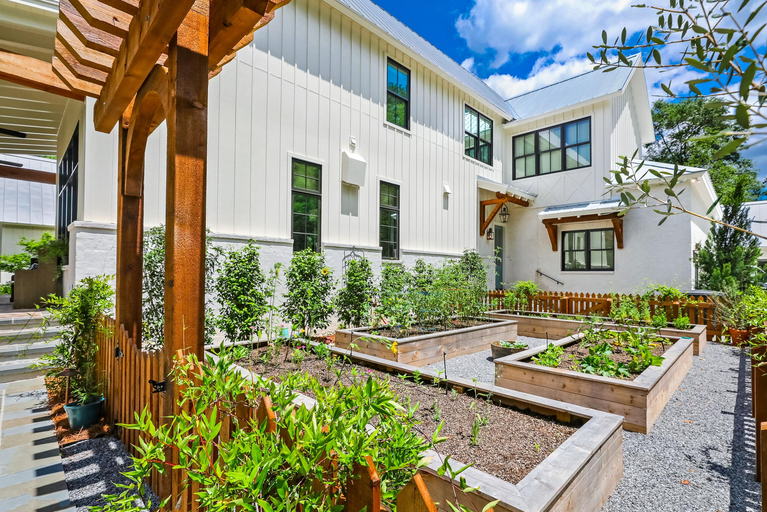
A sunny square plot is a natural fit for four raised beds set around a cross-shaped path. Give the main path enough room for the wheelbarrow or basket you actually use. Make each bed narrow enough that you can reach the middle from the sides, and leave access around the outside wherever you need it. A trellis at the edge can make room for climbing crops.
Decide what goes in each bed
- Give taller crops a spot where they cast as little shade as possible on the shorter beds.
- Put herbs you pick frequently near the entrance so they’re within easy reach.
- Save a few corners for compact flowers such as calendula if they suit your growing season.
9. Break up a gravel garden with planted islands
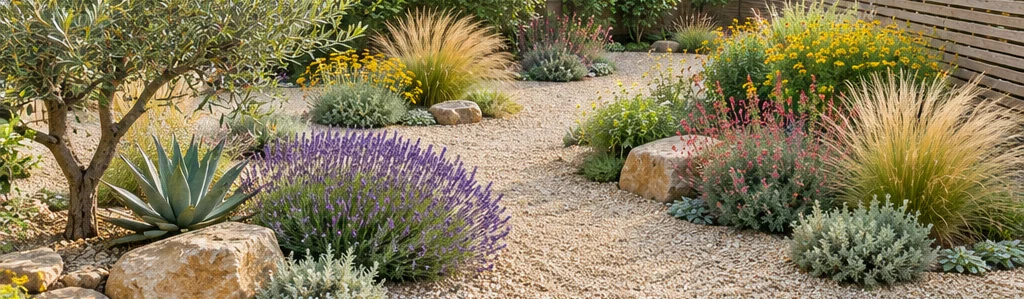
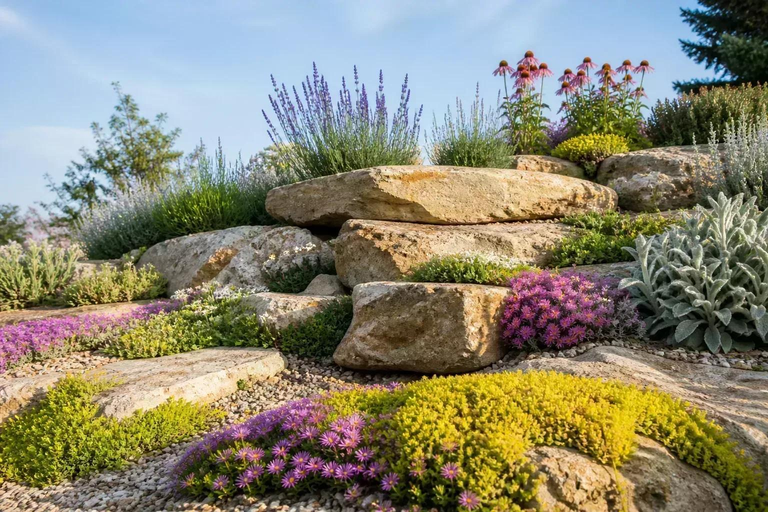
Gravel can give a sunny garden a relaxed feel, especially when plants interrupt it in irregular groups. Place two or three islands at staggered points and let the walking route weave between them. Anchor each island with a larger plant or a stone, then repeat a smaller plant across the groups. Leave enough room to walk comfortably even when the plants fill out.
Match plants to your climate and drainage before settling on a palette. In a sunny spot with fast-draining soil, options might include lavender, low sedums, and compact ornamental grasses. Give new plants the water they need while they establish, then adjust watering as they settle in.
10. Divide a courtyard on the diagonal
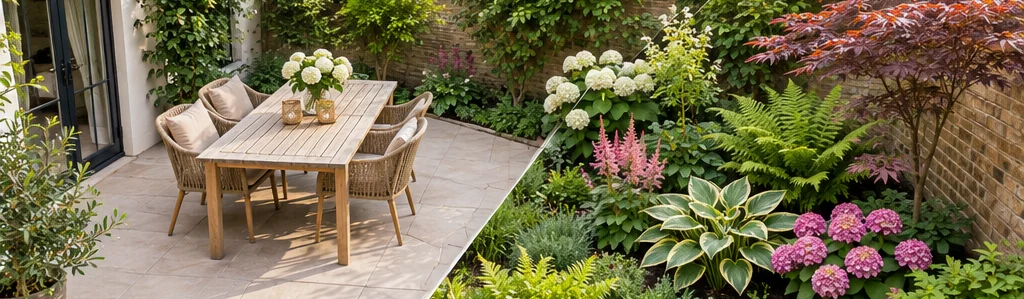
Does your square courtyard feel like one big box? Draw a line from near one corner toward the opposite side, then put a paved dining area on one side and a deep planting bed on the other. The angled edge gives you room for a generous patch of flowers where the bed widens. Keep the route from the door to the table clear.
IMO, the best part of this layout is the view from your chair. Position your tallest plant where it can screen a fence corner, then put shorter flowers where you can see them while seated. Mark the terrace with string and pull the chairs out to check that everyone can sit comfortably.
Pick a layout and try it on the ground
Start with the thing you want to do most outside. A clear path makes a narrow plot easier to use, a bench nook makes the most of a shady corner, and containers or a trellis give flowers a home on a small patio. Once you have a favorite layout, mark it with a hose, a few empty pots, or a length of string. Then take your tea outside and sit where you drew the chair. If you stay long enough for the tea to go cold, you probably put the chair in the right place.