Woodland Garden Ideas Backyards
Does the shadiest corner of your backyard grow nothing but thin grass and fallen leaves? That’s exactly where a woodland garden can shine. A curving path, a few layers of foliage, and somewhere to sit can turn that awkward patch into the place you head for first with your morning coffee.
These woodland garden ideas for backyards work whether you have mature trees, a narrow side yard, or a patio that spends most of the day in shade. Start by watching where the sun lands in the morning and afternoon, then check how damp the soil stays after rain. The right plants for a cool, moist border can struggle just a few steps away under a thirsty tree.
Read the shade before you shop
On a sunny day, take a photo of the yard at breakfast, around lunch, and in the late afternoon. Compare the three views and mark the pockets that get direct sun, the spots with shifting light through branches, and the corners that stay dark. Do this with the trees in leaf if you can. A border that looks bright in early spring can turn into a very different place once the canopy fills in.
1. Let a Curving Path Lead the Way
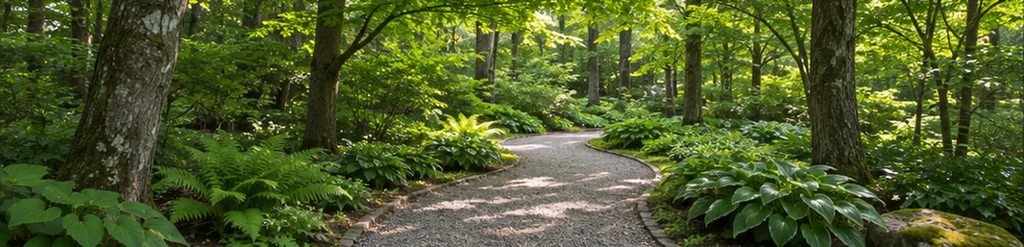
Where would you naturally walk if the garden had no path? Follow that route from the back door or patio, then give it a gentle bend around a planting bed. A curve hides part of the garden and gives you a reason to keep walking. In a narrow yard, one broad bend usually gives you enough room to plant on both sides.
Try wood chips for an informal path or a firm, compacted surface if you regularly push a wheelbarrow or stroller. Lay out both edges with a garden hose and walk the route before buying materials. Work around exposed tree roots and keep the path wide enough to use once the plants fill out.
2. Plant in Layers Beneath the Trees
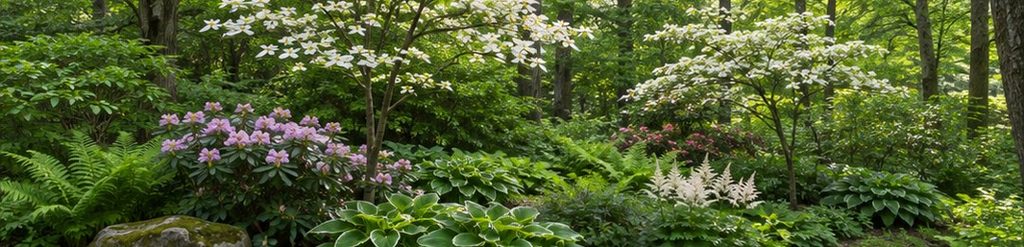
Think about what you see at the edge of a forest. Tall branches frame the view, shrubs fill the middle, and smaller plants spill across the ground. You can borrow the same arrangement for a shady backyard with as little as one small tree and a curved border.
Build from the canopy down
- Canopy: Use existing trees to anchor the garden, or choose a small tree whose mature spread fits the space.
- Middle layer: Group a few shade-tolerant shrubs, with taller ones toward the fence.
- Ground layer: Repeat ferns, sedges, or low woodland perennials in loose drifts.
Leave a few openings between shrub groups. You’ll still see the trunks, and the border will feel spacious even as the lower plants knit together.
3. Swap Struggling Grass for Ground Cover
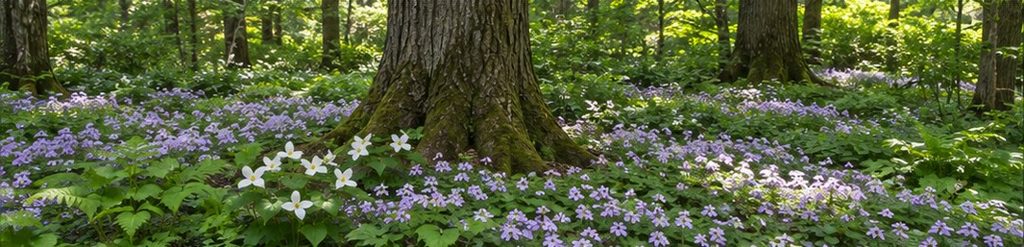
Does grass keep thinning beneath the same tree every summer? Check the soil there a few days after rain. Tree roots compete for moisture, and a dense canopy can intercept rain before it reaches the ground. Dry shade calls for plants that can handle both conditions.
In temperate gardens, some epimediums and bigroot geranium can suit dry shade once established. Buy a few small plants and tuck them into openings between roots, keeping the base of the trunk clear. Water them during dry spells as they settle in, and watch which patch fills out first before buying more. Check local guidance on plant suitability and spread. RHS planting guide
For the first season, cover bare spaces between new plants with a light layer of leaf mold or shredded leaves. Keep the mulch away from stems and tree trunks. Check the ground after a heavy rain to see where leaves collect or wash away, then use those observations to decide where the next patch of ground cover should go.
4. Brighten Deep Shade With Pale Foliage
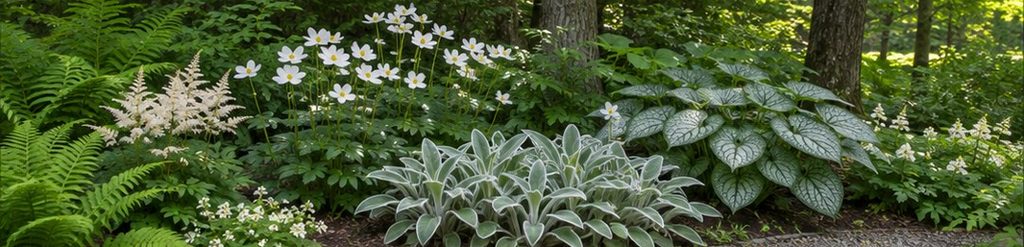
A shaded corner can look flat from across the yard. Cream-edged leaves, pale flowers, or a patch of chartreuse give your eye somewhere to land. Try repeating one pale plant at two points along the path so the planting feels connected from the patio to the back fence.
Choose foliage for the conditions first. A silver-leaved brunnera can suit a cool, reliably moist spot in a temperate garden, while the drier bed beneath a tree needs a different plant. FYI, a light stone or pale planter can provide that same lift in a corner where planting options are limited.
5. Put a Bench Where You’ll Actually Sit
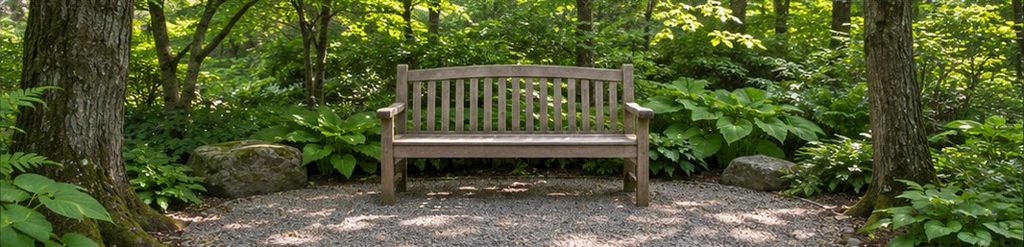
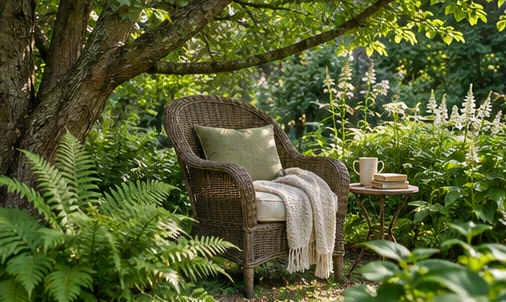
A bench looks inviting at the end of a path, but will you use it there? Carry a spare chair around the backyard and try a few spots. You might prefer the morning light beside the house or a shady seat where you can watch birds in the afternoon.
Set the bench on firm, level ground and leave room to walk up to it without brushing wet leaves. Let low planting frame the front, with taller shrubs to one side for privacy. A small flat stone or side table gives you somewhere to set that coffee cup.
6. Add a Small Water Feature
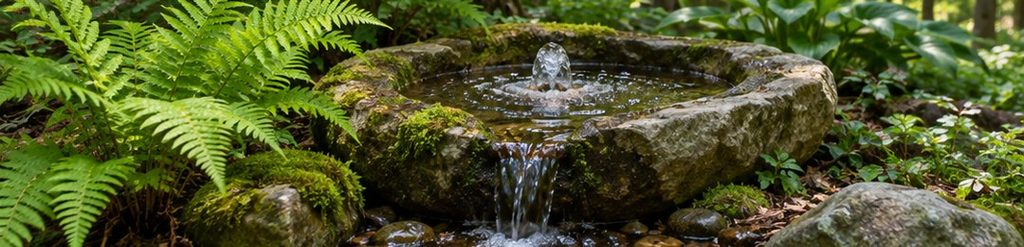
What’s the smallest change that could make your seating nook feel different? Try the quiet sound of a recirculating bubbler. A shallow stone basin looks at home among ferns, and a low flow keeps the sound gentle enough for conversation.
Pick a spot you can reach
Place the basin where you can easily lift out leaves and clean it. A position just outside the densest canopy can cut down on debris. Choose a basin you can empty and scrub, and keep a route open for maintenance once the plants grow. If you want a purely decorative focal point, a dry stone bowl gives the bed a similar shape.
7. Give a Fallen Log a Place in the Border
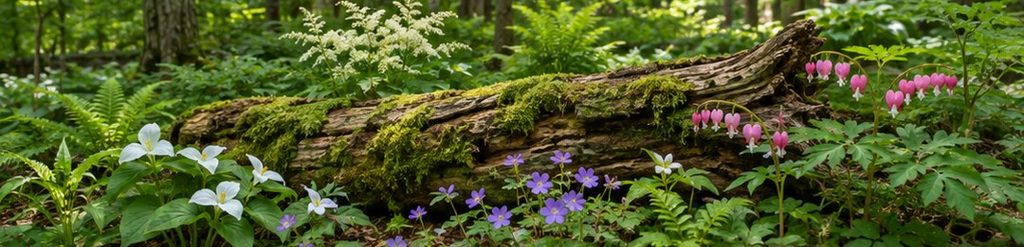
A short piece of untreated wood can do more for a woodland look than a row of matching ornaments. Lay it on its side in a planting bed where it sits securely, then tuck a few ferns or regionally native woodland flowers around it. Leave part of the wood visible so you can enjoy the grain and watch the surface weather.
Could you reuse a small log from your own yard? Over time, decaying wood can provide shelter for insects and other small creatures. Keep it clear of paths and house walls, where it might be in the way.
8. Create a Woodland Corner With Pots
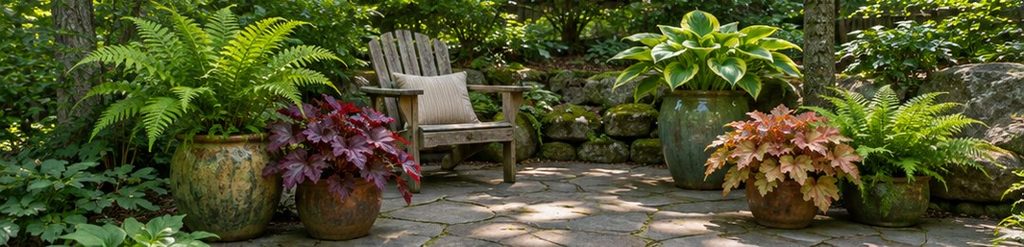
A shady patio can feel surprisingly lush with three well-chosen pots. Put the tallest pot behind two lower ones, then mix an upright fern with rounded foliage and something that spills over the rim. The change in height gives you the layered look of a woodland bed in a small footprint.
Use containers with drainage holes and fill them with potting mix. Check the moisture even after it rains, especially under a roof overhang. If a plant struggles, move the pot a few feet toward brighter filtered light before replacing it. The flexibility is what makes this idea so handy for renters.
For a cohesive look, pick one container finish, such as weathered terracotta or matte dark green. Set the pots where you can reach the soil without moving the whole group. If the patio is tiny, put the largest pot in a corner and let two smaller ones follow the wall. That keeps the middle open for a chair or a clear route to the door.
9. Soften the Transition From Woods to Lawn
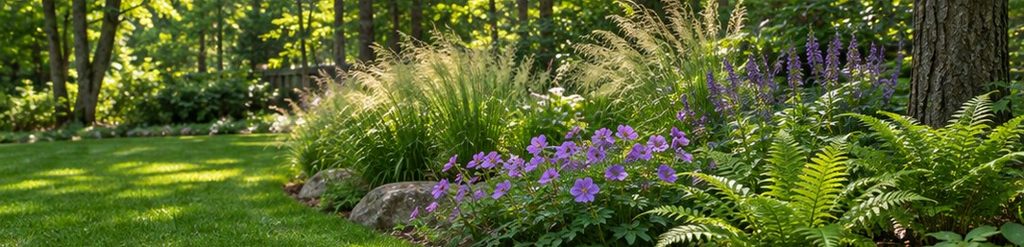
The edge of a tree canopy can give you both filtered light and a few hours of direct sun. Spend a day watching where those sunny patches land. Then step back to the patio and decide where a low sweep of planting could ease the transition from open lawn to the taller plants behind it.
Repeat a shrub or fern from the shadier border to connect the two areas. On the brighter side, try regionally native flowers and grasses suited to the amount of sun and moisture you observed. Leave a clean mowing edge and give each plant room to spread.
10. Use Stepping Stones on a Gentle Slope
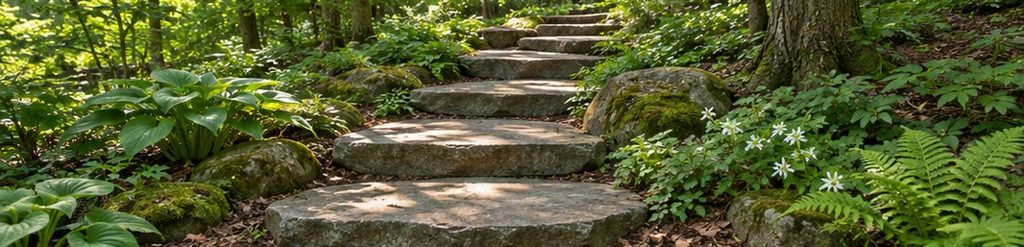
If the back corner slopes gently, broad, textured stepping stones can give you a way through without turning the whole area into a hard surface. Try the spacing with temporary markers before placing any stone. Can you walk naturally in both directions, even when carrying a watering can?
Set each stone so it sits firmly without rocking, and keep low foliage back from the edges. A steep slope or a heavily used route needs a properly designed path or stairway. On either side, repeat the same clumping plants so the route feels like part of the garden.
What Should You Plant in a Woodland Garden?
Start with a nursery list for your region and look for plants that match your yard’s light, moisture, and winter temperatures. If you shop in person, take a photo of the bed and tell the nursery how long the soil stays damp after rain. Ask how tall and wide each plant will grow, especially if it will sit beside a path or beneath a window.
Want interest beyond spring? Combine a plant that flowers early with foliage that holds its shape through summer and a shrub with appealing autumn color or winter branches. Repeat a few favorites around the yard so each new bed feels connected to the last.
Start With One Shady Corner
Pick the corner you already see or pass every day. Add a short path, a few plants that match the shade and soil, and one feature you’ll look forward to using. If you have a spare chair, put it out this weekend and see where you actually want to sit. That might be the easiest garden planning you do all year.