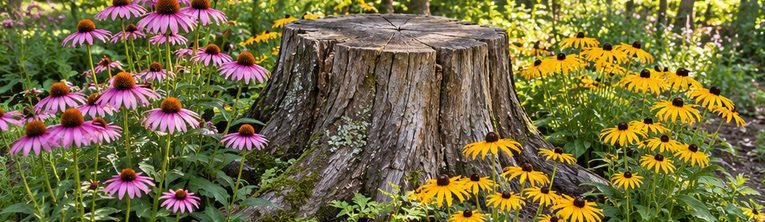
Zen Garden Aesthetic Landscaping with Large Statement Rock & Stepping Stones Ideas
Got a bare corner that looks empty one minute and cluttered the second you add anything? Try giving it one big rock, a few stepping stones, and some room to breathe. The rock gives your eye somewhere to land, while the path gives you a reason to walk over and see it up close.
My favorite layout to sketch starts with an off-center boulder and a path that bends just enough to show a different side of it. You can use that idea in a backyard, a skinny side yard, or even a tabletop tray. Let’s find a layout that fits your space.
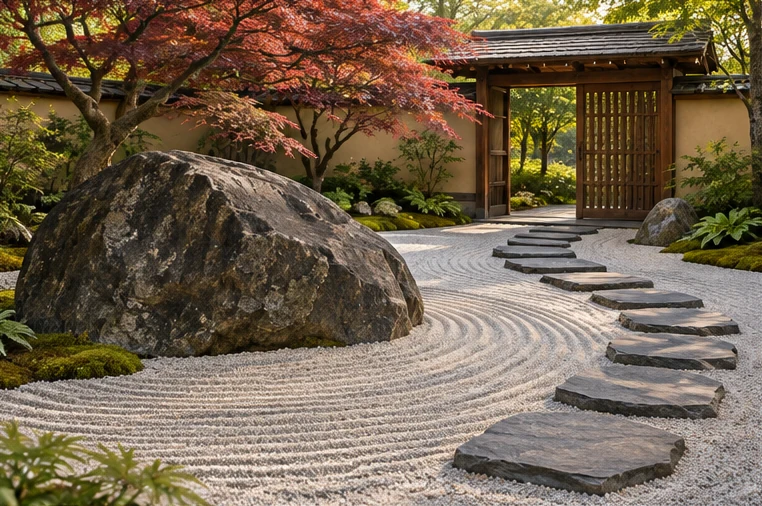
Start with One Large Statement Rock
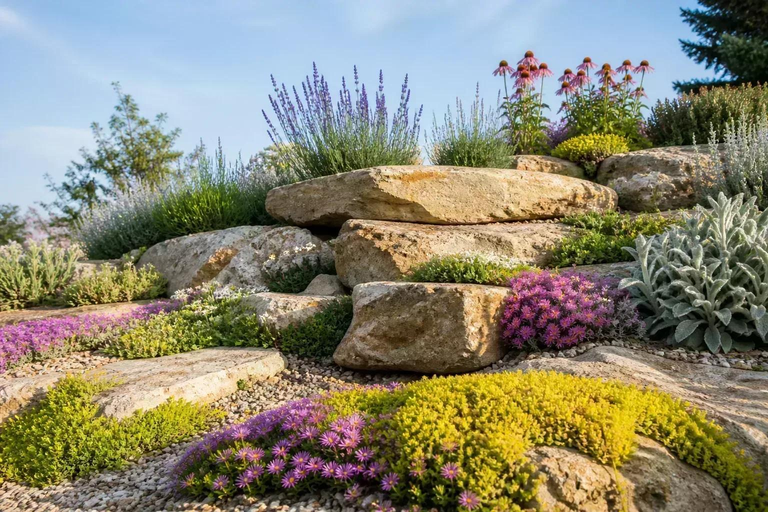
Traditional Japanese dry landscape gardens, or karesansui, use rocks and raked sand or gravel. Borrow the emphasis on open space by leaving a generous stretch of bare gravel where you can see the rock’s silhouette. The Sand and Stone Garden at Portland Japanese Garden is a good place to see how that balance works.
Choose a boulder with an interesting face
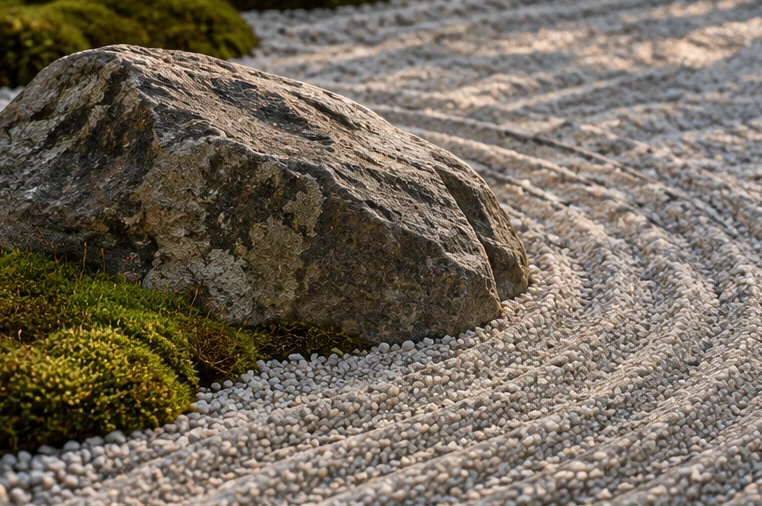
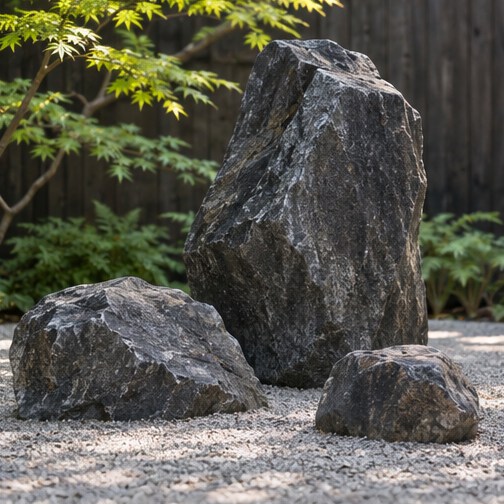
Look for a rock with a sloping shoulder, a band of color, or a rough face that catches the light. A squat boulder can suit a wide courtyard, while an upright rock can draw your eye to the end of a narrow bed. Ask the stone yard to show you how your favorite looks from more than one side.
- For contrast, pair a dark boulder with pale gray gravel.
- For softer tones, set a buff or gray stone against warm beige gravel.
- For a natural grouping, tuck one smaller rock nearby and vary the height and spacing.
Check the placement from inside the house
IMO, the best spot is the one you’ll see most often. Mark the rock’s footprint with cardboard, then look at it from the kitchen window, patio chair, or back door. Shift the marker to one side and see whether the extra gravel on the other side makes the composition feel more open.
For a heavy boulder, ask the supplier or a landscaper about delivery access and stable placement. Have them set it before you spread the finish gravel or lay the path. An irregular base partly tucked into the surrounding grade can help the rock look like it belongs there.
Lay Stepping Stones That Feel Good to Walk On
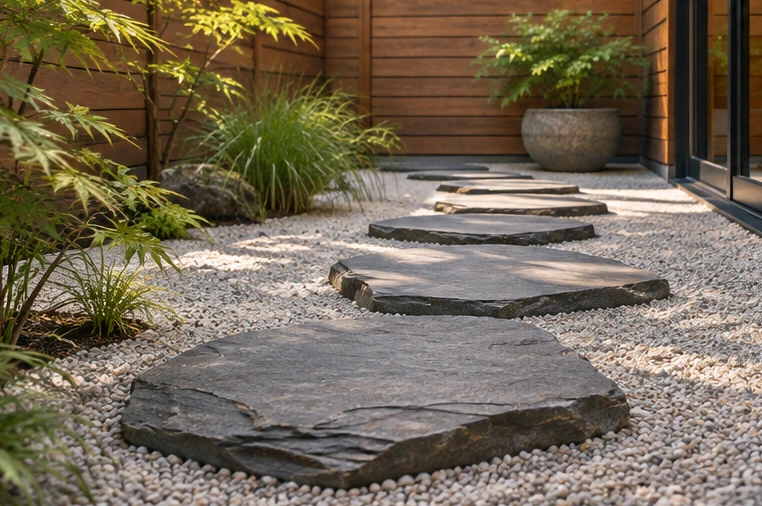
Ever tried a pretty path that made you take tiny steps and then one giant leap? Dry-lay your stones and walk beside them to check your stride before setting them into the ground. Invite someone else to try the spacing.
- Mark the route. Use a garden hose to trace a gentle curve from the entry to a gate, seat, or patio.
- Space the stones. Follow a comfortable stride and pick broad, textured tops that support your whole foot.
- Set them firmly. Use a compacted base suited to your soil and pavers. Check each stone for rocking before filling around it.
- Check the transitions. Bring adjacent surfaces close to the walking height so raised edges are easier to avoid.
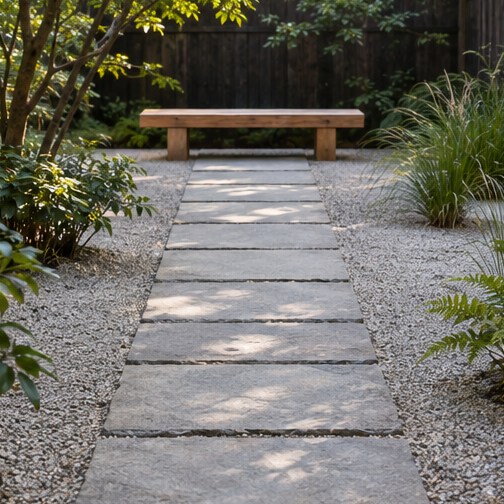
For a route used by someone with a wheelchair or walker, plan a firm, continuous walkway beside the gravel bed. That still gives you room for a few stepping stones on a separate garden route. FYI, a spare flat paver can give you a place to stand while you rake the far side.
Give the path an obvious starting point. If it begins at a patio, bring the first stone close enough to make that step feel natural. At the far end, line up the last stone with the gate opening or the spot where you’ll stand to sit down on a bench. A gentle curve works best when you can still tell where it’s taking you.
Which Zen Garden Sand or Gravel Should You Use?
Outdoor Zen garden sand can be coarse sand or fine gravel, depending on the look you want and how exposed your yard is. Small angular gravel is worth sampling when you want visible rake lines outdoors. A sheltered indoor tray gives you more flexibility to use fine sand and a miniature rake.
- Fine crushed gravel works in an outdoor bed where you want clear lines around a boulder.
- Coarse sand is worth testing in a sheltered bed. See how it looks after a shower.
- Fine sand suits a shallow tray where a small rake can make crisp grooves.
Before buying several bags, rake a sample with the tool you plan to use. Check the color in bright sun and again when the material is damp. Add an edge where gravel meets lawn or mulch so the two surfaces are easier to keep separate.
Try two rake patterns before settling on one
Start with parallel lines across the longest open stretch. Next, try concentric rings around the boulder and let the outermost ring merge into those lines. Does the pattern still read from your favorite chair? If the rings are hard to see from there, widen the gaps or draw one loose arc around the side that faces you.
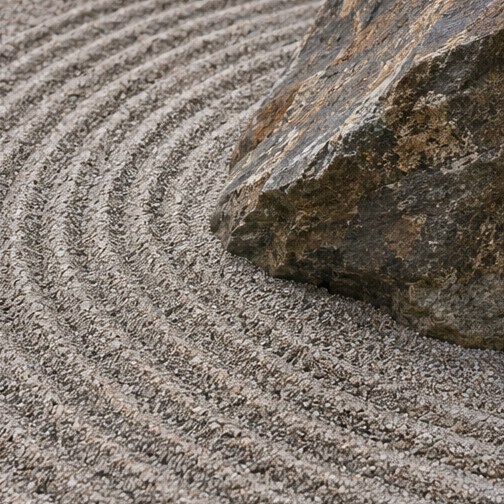
Think about where rainwater goes before you finish the bed. Watch the spot during a shower and see whether runoff from a downspout or paved surface crosses it. If you keep finding grit on the patio after it rains, move the bed outside that flow path or address the drainage before adding gravel.
Four Zen Garden Layout Ideas to Try
1. Curve a path around a boulder in the backyard
Set the statement rock to one side and let the stepping stones sweep around its outer edge. Rake loose arcs near the boulder and keep the rest in long, quiet lines. Place a low bench where you can take in the composition. Want a touch of green? Try a small patch of moss where conditions suit it.
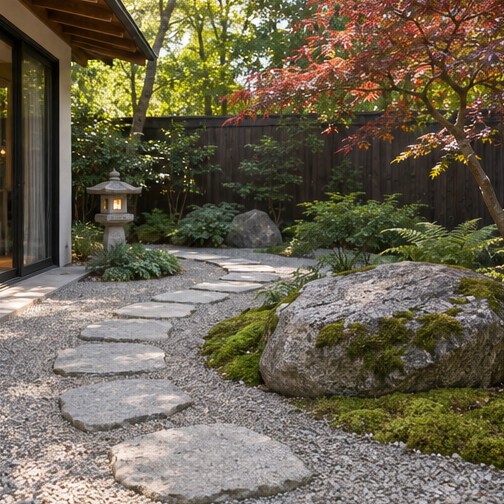
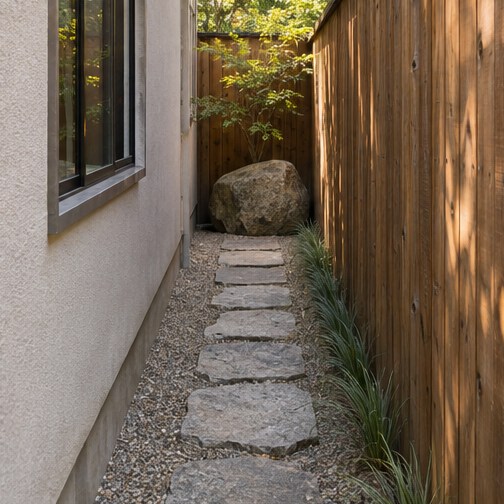
2. Turn a narrow side yard into a stone corridor
Put a low boulder near the far end so there’s something interesting to look toward from the entrance. Run a single row of flat stepping stones along one side and leave the opposite edge open for raking. Use one gravel color throughout to make the strip feel more cohesive.
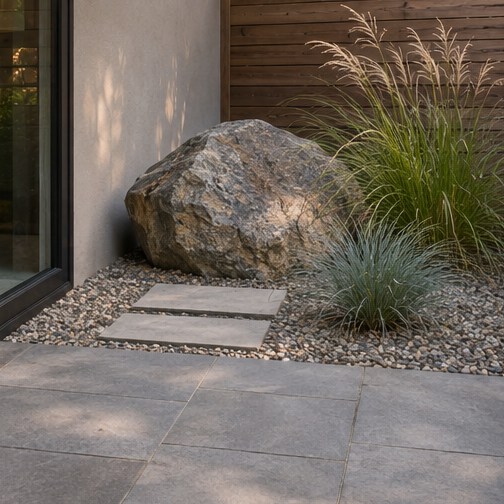
3. Frame a small patio with a dry garden
Use a corner bed beside the patio for a single textured rock and a shallow sweep of gravel. Orient the rock so you can see its most interesting face from your seat. If space allows, place two or three broad stones where you’ll stand to rake or tend a plant. A dark edging strip can tie the bed into nearby patio pavers.
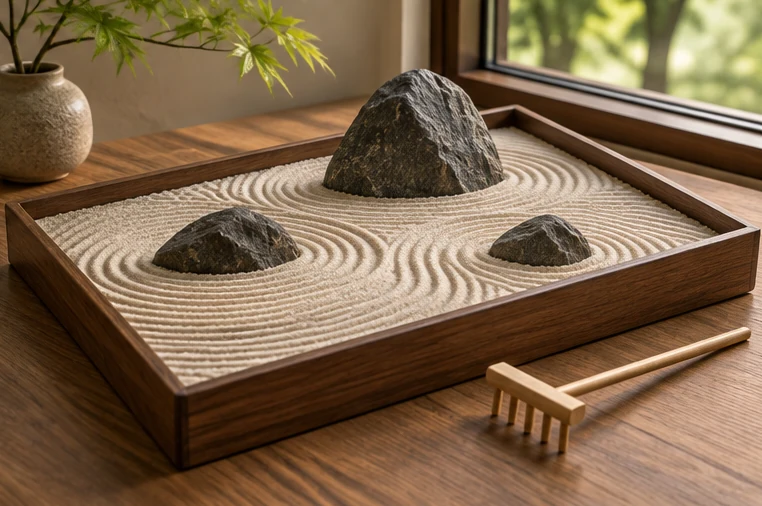
4. Bring the Zen garden aesthetic indoors
Want the look on a shelf or desk? Fill a shallow wooden tray with a thin layer of sand, place one irregular stone off-center, and add two smaller stones nearby. A few flat pebbles can echo an outdoor stepping-stone path. Give the miniature rake its own spot beside the tray so it’s ready whenever you feel like redrawing the lines.
Keep the Garden Easy to Tidy
Pick up leaves before they break down in the gravel. After heavy rain, look for gravel that has shifted and stepping stones that have started to wobble, then reset them as needed. If the rake lines have softened, pull the rake slowly across the open area and finish with curves around the boulder.
Keep plants to a few intentional spots so they leave room around the rock as they grow. A compact fern can soften a shady edge, while a clumping ornamental grass suited to your climate can give a sunny border some movement. Choose the plant after checking how much sun that corner gets.
In autumn, I’d put the rake somewhere handy and leave the drawing until after the big leaf drop. A quick pass along the edges is usually enough between full touchups. If you like the look of a perfectly combed bed, put it somewhere you can reach from two sides.
Zen Garden Landscaping FAQs
Can I use pea gravel in a Zen garden?
Yes, especially as a border or loose decorative fill. Its rounded pieces tend to shift and make softer patterns. Try a fine angular gravel in the area where you want more defined grooves.
How many stepping stones do I need?
Walk the route at your usual pace and drop a marker at each footfall. Count those markers to estimate how many stones to buy. Check that the first and last steps connect comfortably to the surfaces at either end.
Start with the View You Want to See Every Day
Give one boulder the best view, use flat stepping stones to guide visitors past it, and leave enough gravel open for a few easy rake lines. Before you shop, mark the rock with cardboard and the path with a hose. Then make a cup of tea and look at your layout from your favorite chair. You’ll find out quickly where that rock wants to go.