Stourhead Garden Aesthetic
A walk through the lakeside views, woodland paths and classical temples of Stourhead, Wiltshire
Garden designLandmarksSeasonal viewsIdeas for home
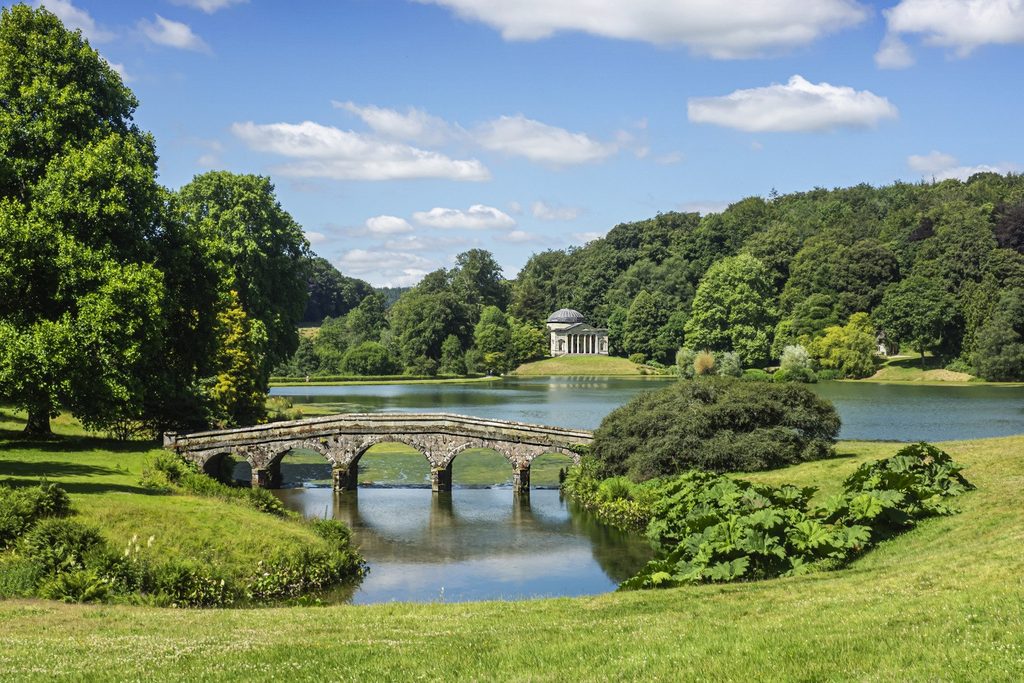
You can spot Stourhead’s stone bridge from across the lake, but wait until you see what happens when you walk a little farther. Trees close in, the water slips out of sight, and then a pale classical temple appears on the opposite bank. If you’ve ever wondered why some gardens feel so much more immersive than others, that little sequence gives you the answer. At Stourhead, the view changes as you move.
The Stourhead garden aesthetic brings together a reflective lake, wooded slopes, and classical architecture in the Wiltshire countryside. Here’s what to look for on a walk around the garden, how the scenes change with the seasons, and which details you can borrow for a much smaller space.
What makes the Stourhead garden aesthetic so distinctive?
Henry Hoare II worked with architect Henry Flitcroft to shape the landscape in the 18th century. Hoare’s travels in Europe helped inspire its classical buildings, and the garden first opened in the 1740s. Its central lake gives those buildings room to be seen from different angles and ties the wooded slopes together. National Trust garden history
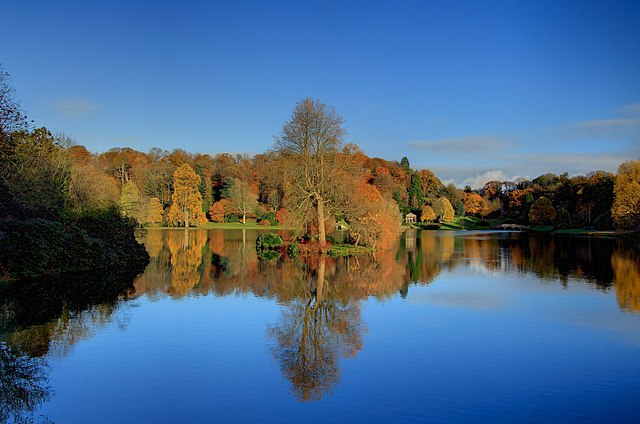
Stand across the water from a temple and notice what surrounds it. A low bank leaves the columns visible, while trees extend the composition well beyond the building. On a calm day the lake doubles the view. On a windy one, ripples break up the reflection and put more emphasis on the shoreline. Either way, your eye has enough space to land on the architecture before wandering into the trees.
The paths matter just as much. If you could see every landmark from the entrance, there would be little surprise left for the walk. A bend or a patch of woodland gives you a pause between open views, and a glimpse of stone through the branches gives you a reason to keep going.
Three landmarks worth slowing down for
The Palladian Bridge and the Pantheon
The five-arched Palladian Bridge is one of the garden’s most recognisable features. From a spot where you can see the bridge and the Pantheon together, the low arches carry your eye across the water toward the taller building. Look again from another point along the bank and the two landmarks shift in relation to each other. That’s why taking a few steps can improve a photo more than zooming in.
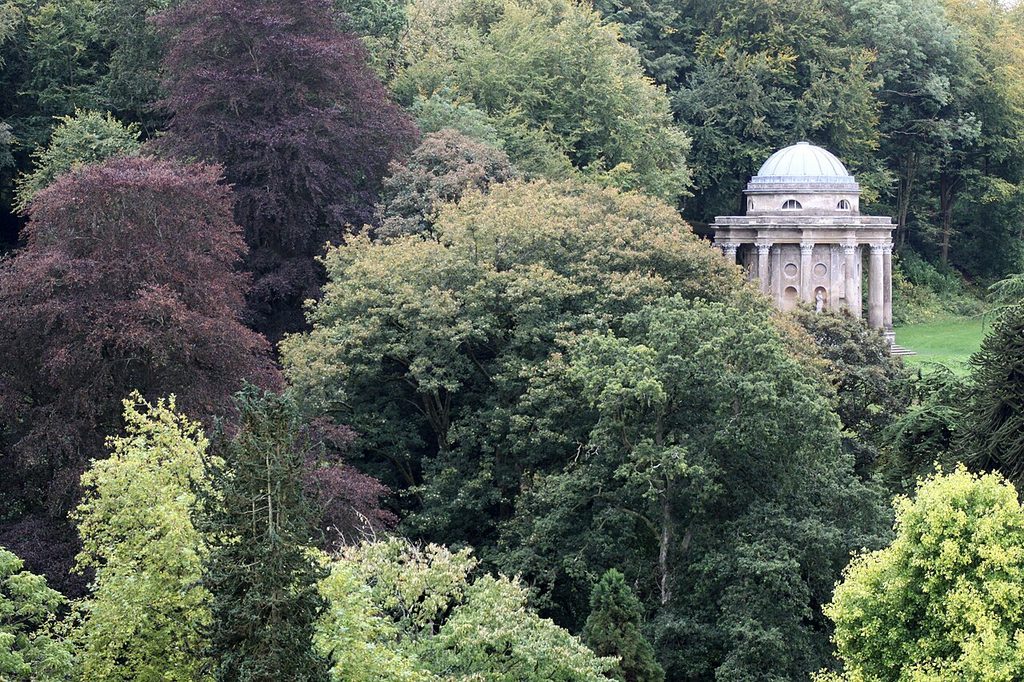
The Pantheon, inspired by the building of the same name in Rome, was built in 1753–54. Its columned front gives the opposite bank a clear focal point, but it’s worth looking at the way the trees around it soften the outline. When the leaves are out, the pale stone stands out against a deep green backdrop. National Trust landmark history
The Temple of Apollo
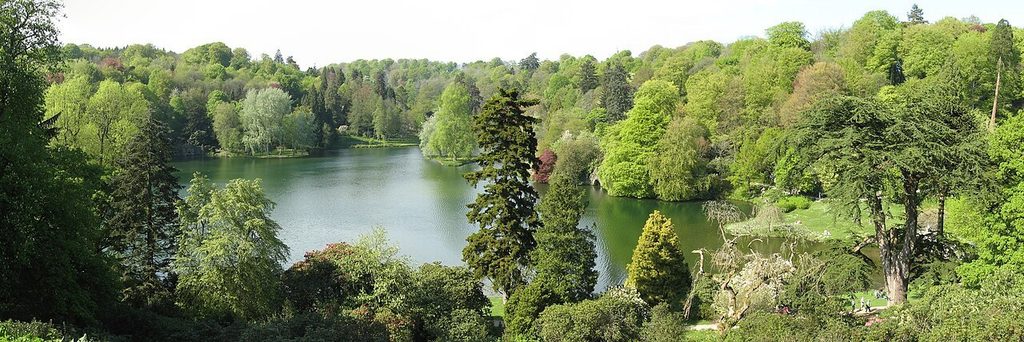
The round Temple of Apollo offers a change in scale and perspective. From below, its columns read as a small, bright shape on the hillside. From the raised viewpoint, you can pick out curves in the shore and see how much woodland surrounds the lake. If both viewpoints are accessible on your visit, compare them. The first makes the temple the subject, while the second shows how it sits within the wider garden.
The Grotto
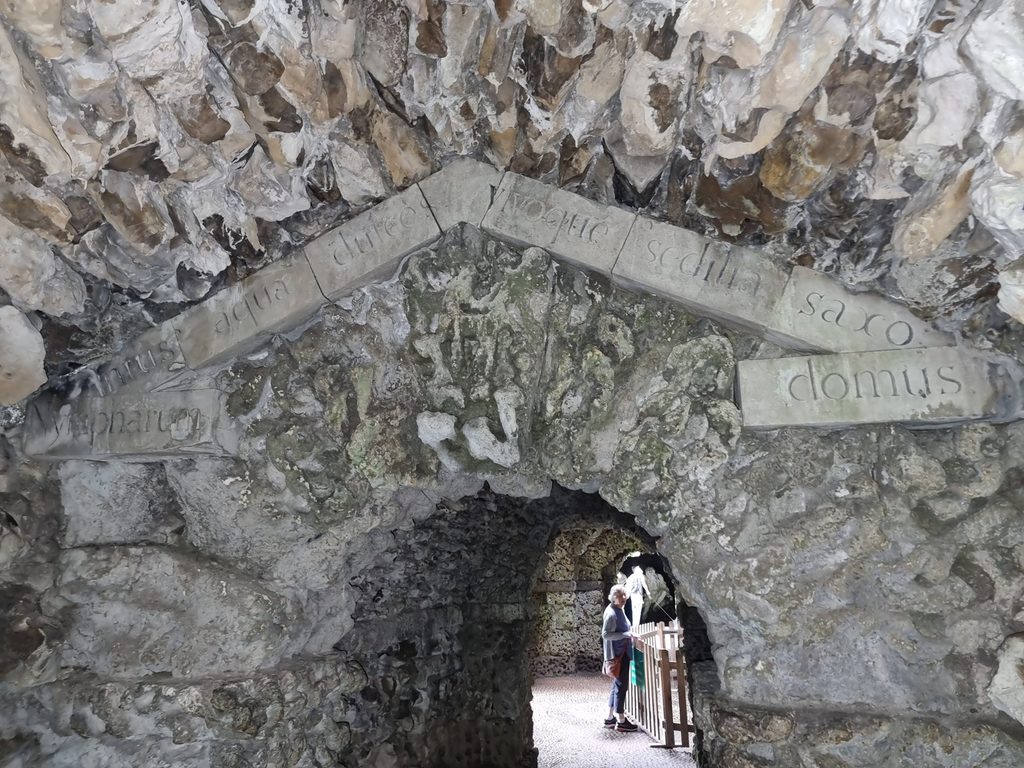
The grotto brings the walk down to a more intimate scale. Rough stone, shade, and openings toward the water give it a different feel after the exposed lakeside views. The cool interior was part of its original appeal. Give your eyes a moment to adjust and notice how bright the landscape looks when you turn back toward the opening.
When does Stourhead look its best?
Autumn is the obvious pick if your favourite photos have copper leaves, dark evergreens, and warm colour reflected across the lake. For a strong composition, find a view with both foliage and pale stone. The building gives the eye somewhere to rest amid all that colour.
Spring gives the garden a fresher palette, with bright new leaves that make shaded woodland feel lighter. Summer brings fuller canopies and strong contrasts between sunny banks and sheltered paths. Winter is a good time to study the shape of the landscape, when bare deciduous branches reveal more of the slopes and the buildings behind them. A bright overcast day can be lovely in any season because it softens the shadows around the stonework.
Give yourself time to walk at a relaxed pace and revisit a view if the light changes. The hillier sections and sheltered paths can feel quite different from the lakeside, especially after rain. Check current opening information and accessible routes before choosing where to start. National Trust visitor information
How to borrow the Stourhead look at home
Pick one thing you’d enjoy seeing from the kitchen window or the end of a path. A pale stone planter, a simple bench, or a shallow water bowl will do. Set it against darker foliage, then leave a little breathing room around it. Before you dig or buy anything, try putting a spare chair in the spot and look at it from a few everyday angles.
- Frame a view. Plant on either side of a sightline, keeping the middle clear so the eye can travel to the main feature.
- Reveal it gradually. Put a tall pot or a loose shrub beside a bend so a seat or water bowl comes into view a few steps later.
- Use water on a small scale. A broad, shallow bowl can catch the sky and reflect overhead leaves on a still day.
- Repeat a few materials. Pale stone, dark green foliage, and weathered wood can carry the look across several corners without making each one feel identical.
Take the same idea indoors
If you’re collecting huge living room ideas for a “Modern Aesthetics Big Living Room” mood board, start with the view from the doorway. In a wide living room, an open line of sight toward a garden window can make the view part of the room. Keep tall furniture to the sides and use a low bench or a pair of chairs to frame what’s outside.
The view to try on your next walk
Next time a garden stops you in your tracks, look at what’s closest to you, what’s farthest away, and how the space between them is arranged. At Stourhead that might be a branch overhead, the Pantheon across the lake, and a broad stretch of water in between. Once you spot how those three pieces work together, you’ll start seeing the same possibilities in a tiny courtyard or along an ordinary garden path.