Patio Vegetable Garden Design: 20 Charming Ideas for a Small-Space Harvest
Turn a sunny patio into a leafy, delicious retreat with smart containers, vertical planting, and a layout that leaves room to relax.
A practical guide to planning, planting, and enjoying your own patio harvest
A patio can do more than hold a chair and a grill. With a few well-chosen pots, a sunny wall, and a little planning, it can become a welcoming place to grow tomatoes, salad greens, peppers, and herbs. The best patio vegetable garden design balances good growing conditions with the way you actually use the space: easy to water, comfortable to walk through, and pretty enough to enjoy even before harvest.
1. Start with sunlight, access, and a simple plan
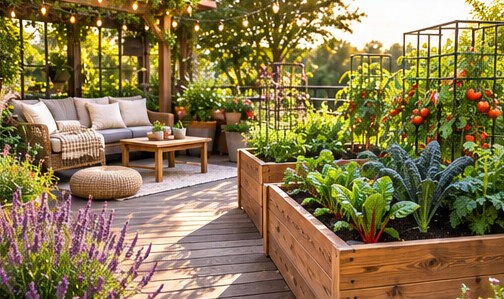
Watch your patio at a few points during the day before buying planters. Fruiting crops such as tomatoes, peppers, and eggplants usually appreciate the sunniest spot, while lettuce, spinach, and many herbs are more forgiving when they receive some afternoon shade. Keep plants close to a water source and leave a clear route from the door to seating areas. A garden that is easy to reach is much easier to maintain.
Sketch the patio and mark sunny corners, walls, railings, doors, and the place you want to sit. Then group containers by watering needs. This makes daily care simpler and gives the space a composed look instead of a collection of scattered pots.
2. Choose containers that look good and work hard
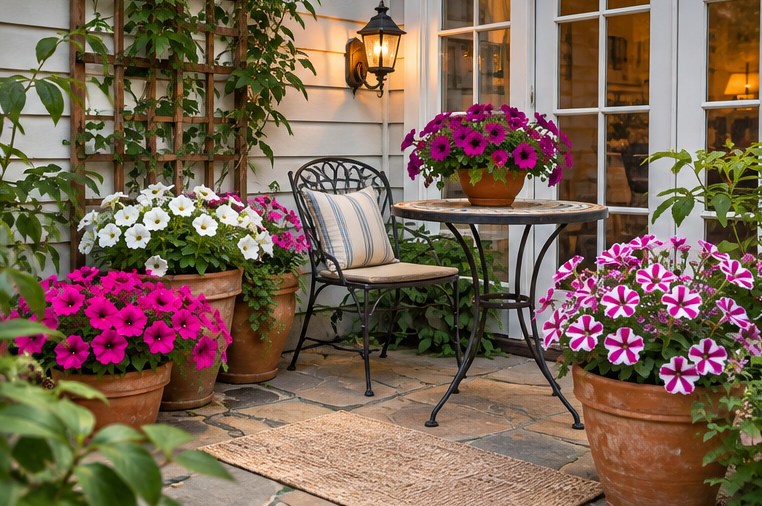
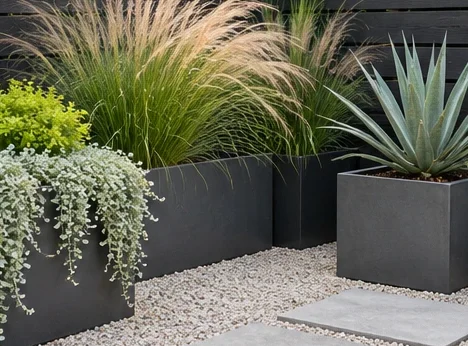
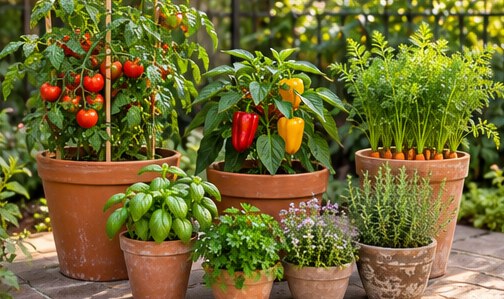
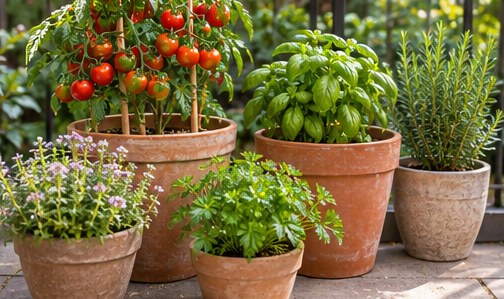
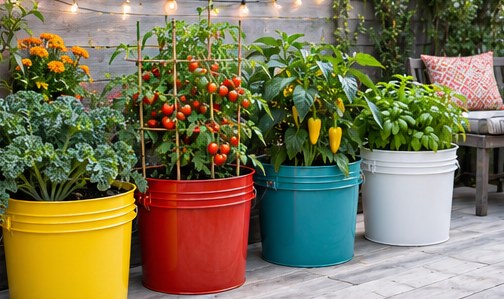
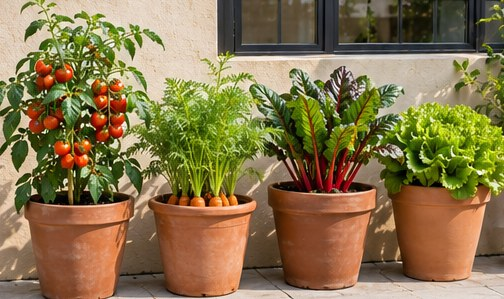
Container style sets the mood. Terracotta brings a warm, classic feel; cedar boxes look natural beside a fence; and simple dark planters create a modern backdrop for bright foliage. For a collected look, repeat one material or color rather than matching every pot exactly. A few large containers usually look calmer—and hold moisture longer—than many tiny ones.
Give roots the room they need
Use pots with drainage holes and choose a size suited to the crop. Tomatoes, peppers, and larger plants need generous, deep containers; shallow bowls are better for leafy greens and herbs. Fill them with a quality container mix rather than dense garden soil, which can compact in a pot. Set saucers or pot feet thoughtfully so water drains without staining or pooling on the patio.
3. Build upward when floor space is limited
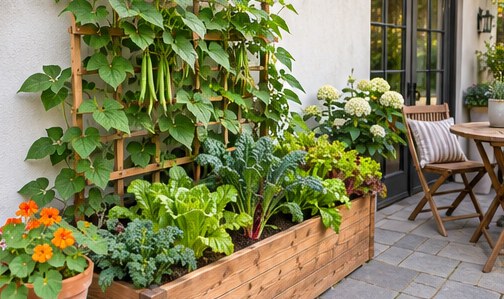
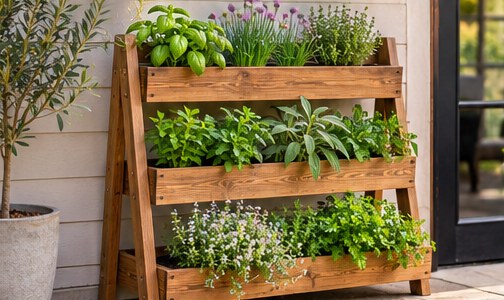
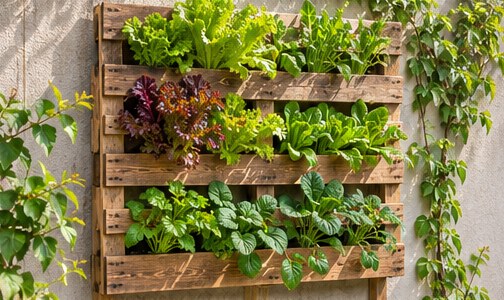
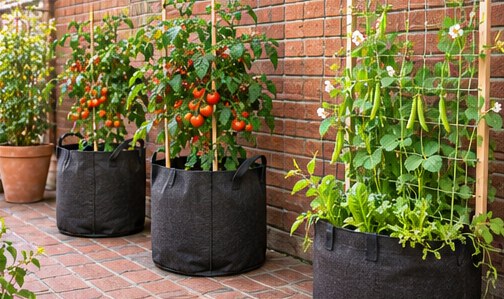
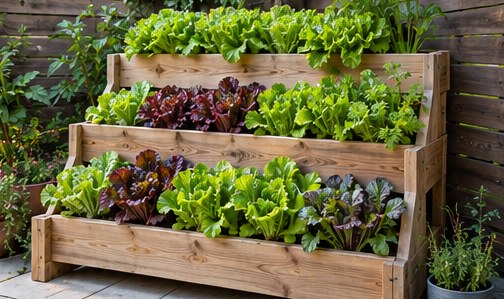
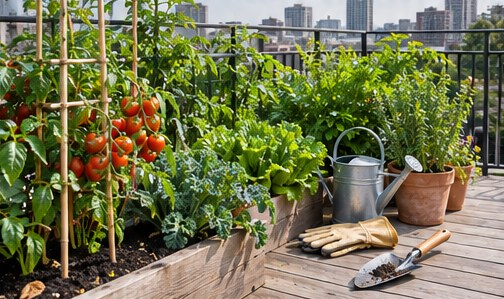
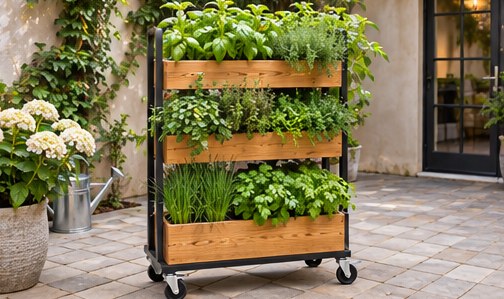
Vertical growing adds lushness without taking over the patio. Use a sturdy trellis for peas, beans, or a supported tomato, and place it securely so wind cannot topple the planter. A tiered stand works well for herbs and compact greens; wall-mounted pockets can hold small, light plants. Keep heavier pots on the ground and check that railings or walls can safely support any hanging system.
Think in layers: a tall trellis at the back, medium pots in the middle, and low bowls or herbs along the front. This creates a garden view with depth while leaving the main walking path open.
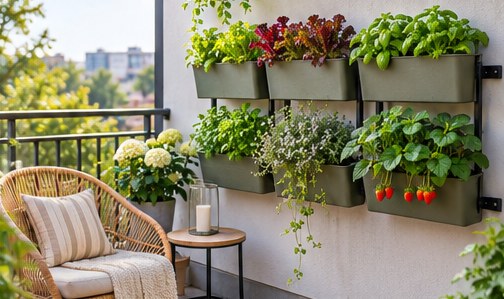
4. Make a potted vegetable garden feel like a room
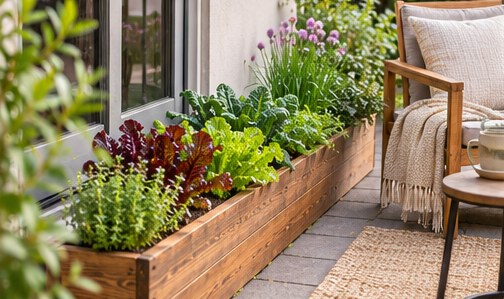
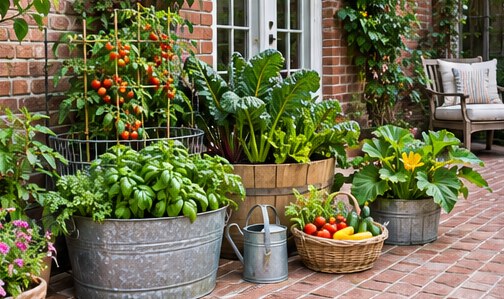
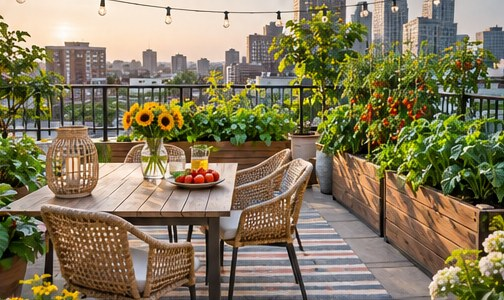
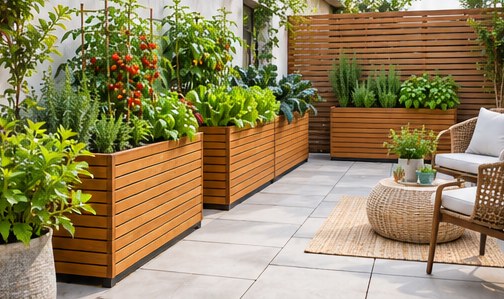
A potted vegetable garden can feel intentional when you arrange it like an outdoor room. Place the largest planters along the edge to define the space, then tuck a small table or chair into the open center. Repeat a few colors—perhaps warm wood, leafy green, and terracotta—to connect the garden to your home’s style. If the patio is narrow, use long troughs along the wall instead of bulky round pots.
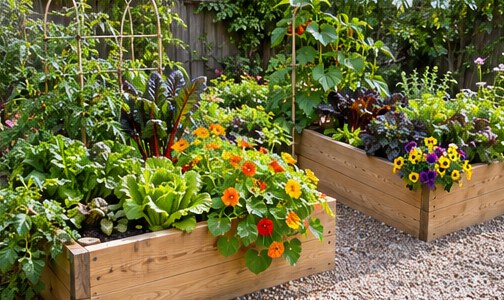
For a welcoming look, mix edible plants with a few flowers. Calendula, marigolds, or nasturtiums can soften the edges and bring cheerful color. Keep flowers and vegetables in containers with similar light and watering needs, and avoid crowding plants simply to make the patio look fuller.
5. Pick crops that suit your space and appetite
Grow what you enjoy eating and what fits your light. Compact tomatoes, bush beans, peppers, radishes, lettuce, spinach, and herbs are popular choices. Look for dwarf or container-suitable varieties, and stagger quick crops such as salad leaves so a pot stays productive.
Pair plants by their needs, not just their appearance. Mint spreads readily, so keep it in its own pot. Tall crops should not shade out smaller ones, and thirsty plants are easier to manage when grouped together. A small trellis can support climbing beans while adding a graceful green screen.
6. Borrow backyard vegetable garden ideas for patios
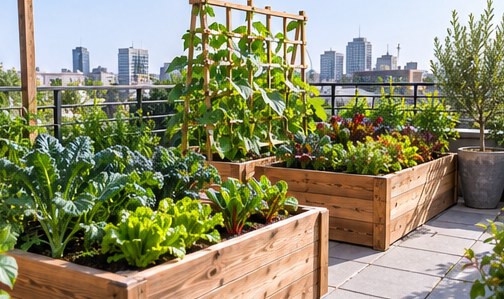
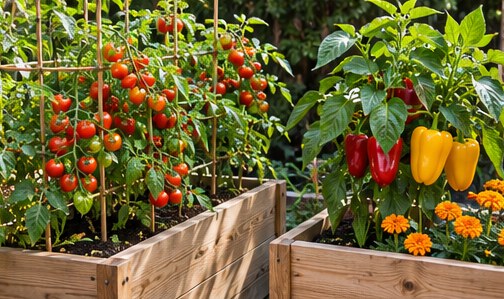
Many backyard vegetable garden ideas adapt beautifully to patios. Try a square-foot grid in a raised box, a narrow border of planters, or a small “salad station” with lettuce, chives, parsley, and basil near the kitchen door. If you have a fence, use it for a trellis or a slim vertical planter. If you have a little more room, two raised boxes placed in an L shape can create a productive corner while leaving a comfortable standing area.
Keep the layout flexible. Put wheels under a large planter if you may need to shift it for seasonal sun, and use lightweight containers where moving them matters. Leave enough space to reach the back of each box without stepping into the planting area.
7. Make daily care part of the design
Convenience is a design feature. Keep gloves and snips in a weather-safe basket. A drip line or self-watering planter can help in hot weather, but pots still need regular checks because they dry faster than garden beds. Water the soil when possible and follow feeding directions for your mix and crop.
Quick patio setup checklist:
- Choose the brightest practical spot and check it through the day.
- Use containers with drainage and enough root space.
- Group crops by sunlight and watering needs.
- Keep a clear path and a reachable water source.
- Add sturdy supports before climbing plants get heavy.
Grow a patio that feels like yours
A successful patio garden does not need a complicated blueprint. Start with a sunny corner, a few roomy pots, and vegetables you already love to eat. Add height with a trellis, repeat materials for a polished look, and keep the path and watering routine simple. Whether you prefer a colorful potted display or neat raised boxes, a thoughtful patio garden can bring fresh flavor, greenery, and a satisfying little harvest right outside your door.