10 Gravel Front Garden Ideas
Is your front garden a patch of tired lawn, a strip of bare soil, or a walk to the door that feels a little plain? Gravel can give it a clearer shape and make room for flowers, pots, or a proper path. These 10 gravel front garden ideas range from an afternoon refresh to a full front yard makeover. My favourite starting point is to picture the view from the pavement, where the shape of the path and the planting around the door are easiest to see.
Explore the ideas
1. Frame a stepping-stone path with lavender
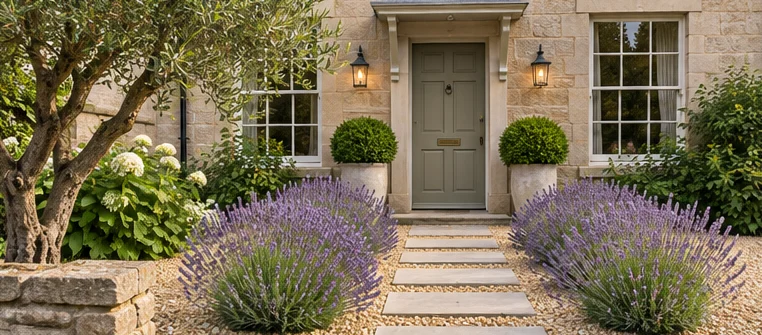
Leave room for the plants to spread
Start with a ribbon of buff gravel from the gate to the front door, then set broad, flat stepping stones into it. Try walking the route before you fix the stones in place. Does the spacing feel natural when you’re carrying groceries? For a busy entrance, use closely spaced paving or a continuous paved strip and keep the gravel along the edges.
Plant lavender where it will get plenty of sun and the soil drains freely. Use the plant label’s mature spread to work out the distance from the path, especially if you pick a larger variety. A second row of low-growing thyme can soften the outer edge, while a simple metal border helps keep gravel away from the lawn.
2. Pair dark gravel with oversized pavers
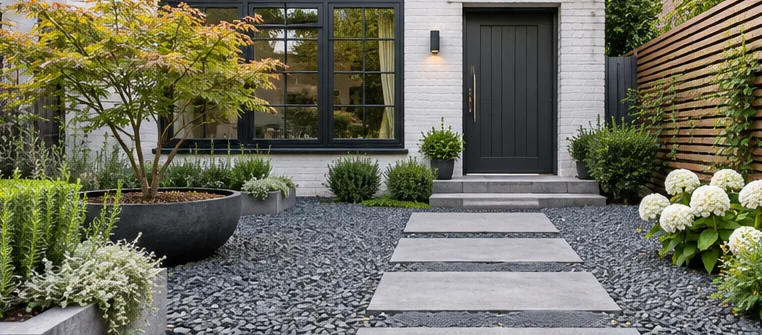
Charcoal gravel and pale concrete pavers give a modern front garden a strong, simple pattern. Line the slabs up with the doorway or a prominent window, then repeat the straight edges in a slim planting bed. A few low grasses at the corners will soften the hard lines without hiding the layout.
Before ordering a bulk bag, put a handful of each material next to your brick, siding, or render. A cool grey can look bluish next to warm brick, and wet gravel often looks darker than a dry showroom sample. FYI, this is also a good time to check how much contrast you’ll have between the pavers and gravel on a cloudy day.
3. Wind a gravel path through cottage flowers
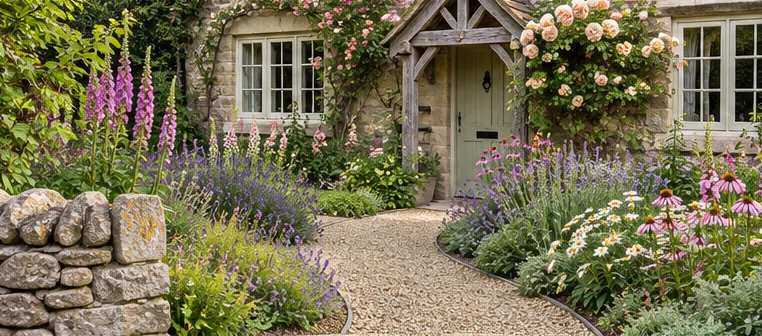
A gently curved path makes a small front yard feel like a garden you can wander through. Keep the curve broad and plant in repeated groups along both sides. Try catmint and hardy geraniums near the front, then add taller salvias farther back where they can rise above the lower flowers.
Want the border to feel full without losing the path by midsummer? Set the plants back far enough for their mature spread and leave a few small gaps for seasonal bulbs. Repeat one flower colour near the gate and again by the door. That simple echo ties the two ends of the garden together.
4. Give a small tree its own gravel island
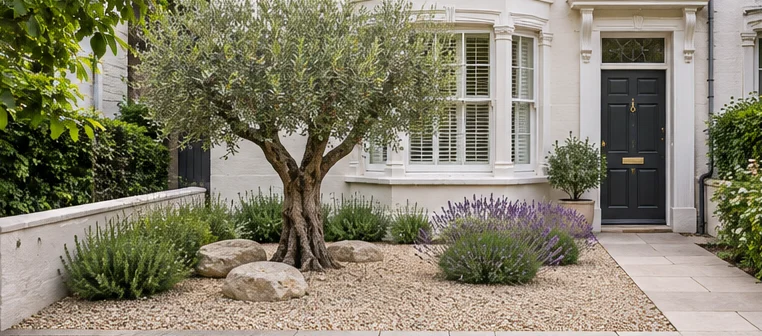
An open patch of gravel gives a small tree room to show off its shape. Set it slightly off centre so the branches frame the approach to the house. An olive suits a sunny, mild spot with good drainage, while a locally suitable small tree can give you a similar silhouette in a colder climate.
Check the tree’s mature height and width before you settle on a spot. Think about the view from the front window and how the canopy will sit beside the roof, entrance, and driveway. Leave a planting area around the base and keep gravel back from the trunk so the root flare stays visible.
5. Contrast pale gravel with ornamental grasses
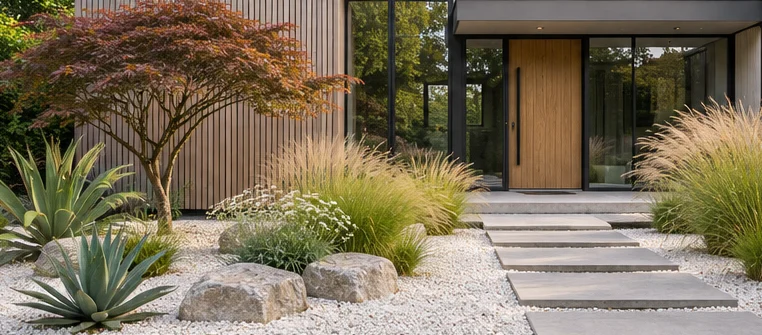
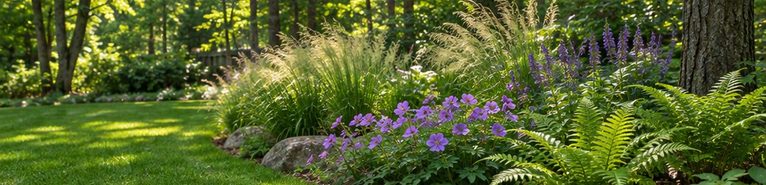
Pale gravel makes the outlines of ornamental grasses easy to see, especially when the afternoon light catches their seed heads. For a tidy look, use groups of three or five and repeat the same grass across the garden. Pick a variety suited to your light and rainfall, then use one lower plant to fill the foreground.
Would a large white surface look too bright from your front window? Try an oatmeal or soft grey sample against the house first. Near deciduous trees, a mid-toned gravel also makes fallen leaves less conspicuous between cleanups. A narrow border along the pavement helps keep stones where you put them.
6. Build a Mediterranean-style welcome with pots
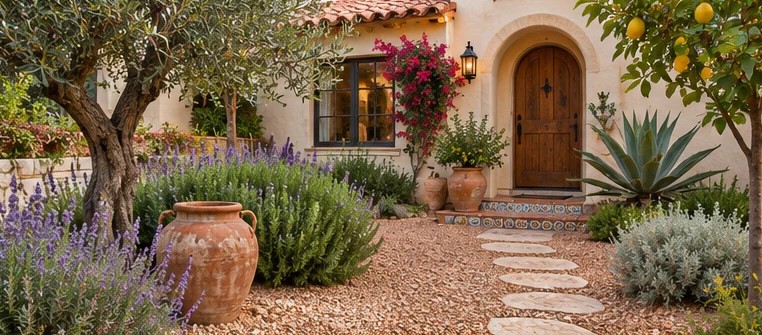
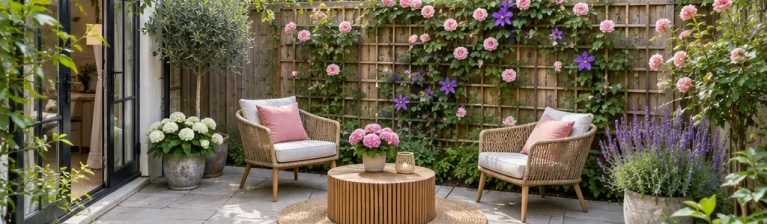
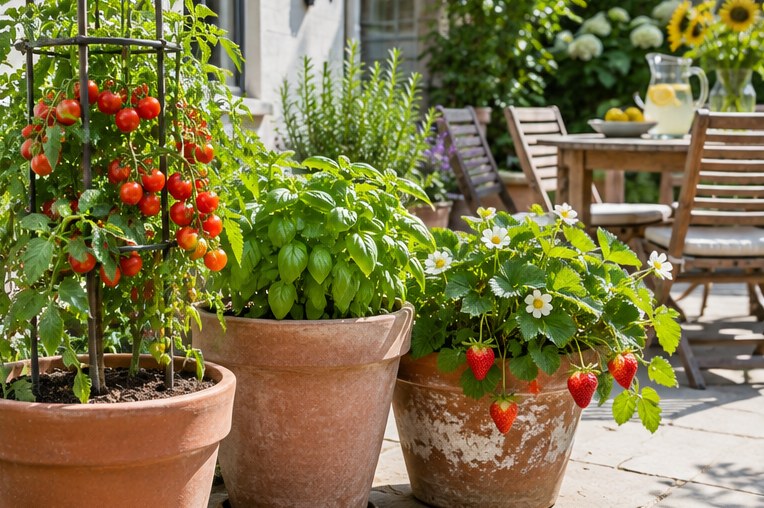
Pair warm gravel with a few generous terracotta pots for an entrance that looks inviting year-round. Give the largest pot a clear spot by the steps and group two smaller ones nearby. Rosemary and thyme suit sunny positions, and a pot of pelargoniums can bring a punch of colour in the warmer months.
Put each pot on a level paver or another firm surface within the gravel. Look for drainage holes and lift the base slightly on pot feet where needed so excess water can escape. In a frosty climate, choose outdoor containers rated for winter conditions or move vulnerable pots under cover when temperatures drop.
7. Turn a wet corner into a rain garden
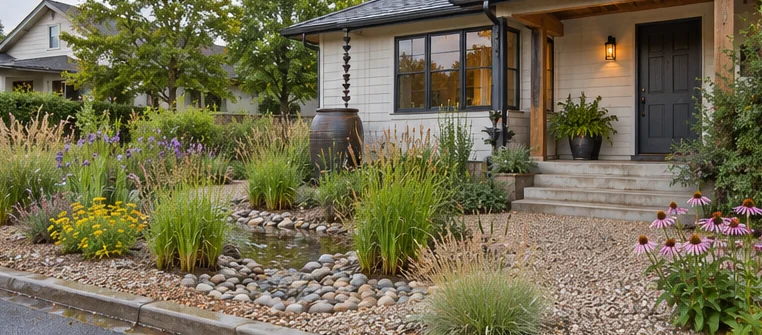
Follow the water after a shower
Does rain regularly pool in the same part of the yard? Watch where the water comes from, then consider a shallow planted rain garden in a suitable spot away from the house. A short strip of cobbles can make the inlet look intentional, while gravel along the upper edge connects it to the rest of the design.
Check whether the soil drains well enough and look up local siting guidance before you direct any runoff into the bed. Choose plants suited to periodic flooding and dry spells for the lowest part, and use plants that prefer drier soil higher up. Keep a clear overflow route that carries excess water away from buildings.
8. Use raised beds to make a narrow yard work harder
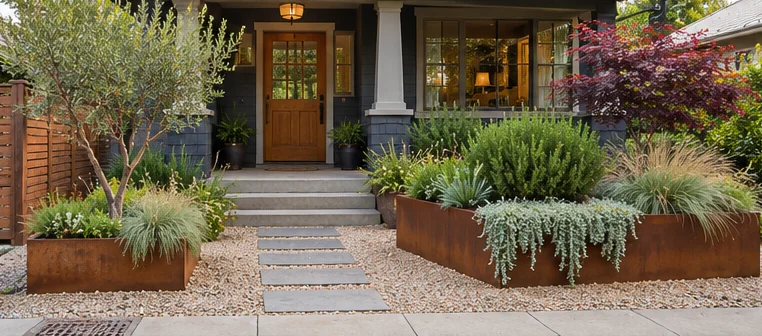
A slim raised bed can turn the awkward strip next to a porch into usable planting space. Run it along one edge and keep the route from the gate clear. In a narrow gravel yard, a single long planter often feels calmer than a row of small pots and gives roots more room to spread.
Choose plants that stay within the bed’s width at maturity. Try low herbs on a sunny side or compact shade plants beside a porch that blocks the light. Set the bed far enough from the house to give the wall breathing room and preserve access to vents, meters, and other fixtures.
9. Anchor a dry garden with boulders and succulents
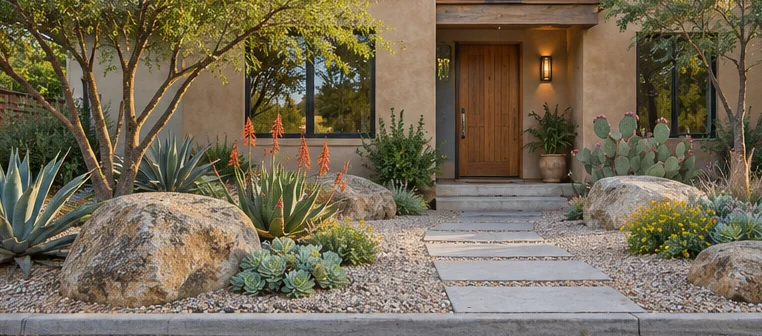
Start with one larger rock and two smaller companions in a gravel bed. Set part of each stone into the ground so the grouping looks settled, then tuck drought-tolerant plants into pockets around it. Match the stone colours loosely so the gravel and boulders feel like part of the same scene.
IMO, a little open gravel around the biggest rock gives this layout more impact than squeezing a plant into every gap. Try hardy sedums or hens and chicks where winters are cold and the soil drains freely. In milder areas, choose sculptural succulents suited to your climate and keep any spiny plants well back from the walkway.
10. Give a gravel walkway a warm glow at dusk
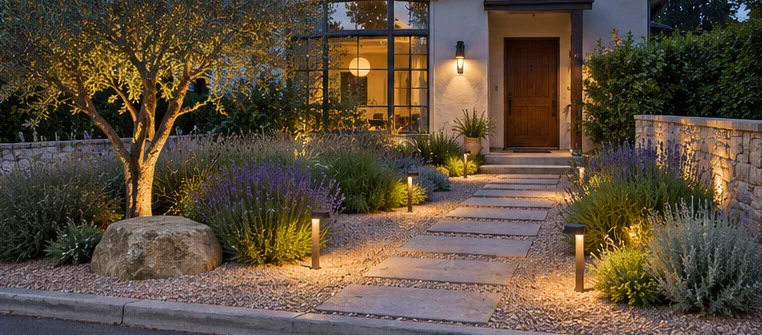
Pick a few spots where light will help someone find their way, such as the gate, a bend, or the first step. Use warm, shielded fixtures that aim light down toward the walking surface. Offset them along the path and give each light enough space to pick out a different part of the garden.
Go outside after dark and take the same route a visitor would. Can you see where the paving ends and the steps begin? Adjust the fixtures from that viewpoint and check the view from inside too, especially if the path runs close to a front window.
What gravel works best in a front garden?
Choose your gravel by how you’ll use the space. A path you walk every day feels different underfoot from a planting bed you cross once a month. If you’re comparing gravel yard ideas, bring home a couple of samples before committing to a colour or stone shape.
- Angular gravel interlocks better underfoot and suits paths when laid over a properly prepared base.
- Rounded pea gravel gives planting beds a softer look and benefits from a defined edge to control spillover.
- Paving with gravel borders provides a firm route for wheels and makes it easier to move bins or push a stroller to the door.
Whatever you choose, rake stray stones back into place and clear fallen leaves before they break down into the gravel. If you’re refreshing a single bed, outline it with a garden hose first and see how it looks from the street.
Start with the view from your gate
The best gravel front garden ideas work with the way you already use the space. Give your everyday route a firm surface, choose plants for the light and soil you have, and leave room for them to grow. Take a photo from the gate today and sketch one change onto it. You might find that your makeover starts with a straighter path, a single big pot, or finally giving that soggy corner a job.