20 Sloping Garden Ideas Retaining Walls
Your garden drops away from the back door, the mower keeps sliding sideways, and the only flat spot is where the bins live. Sound familiar? A well-placed retaining wall can turn a sloping backyard into somewhere you can eat, grow herbs, or sit with a cup of tea. My favorite designs give every change in level a job, even if that job is simply showing off a bank of flowers.
These 20 sloping garden ideas cover retaining walls for everything from a modest side yard to a steep hillside. Start by asking what you wish you could do outside today. That answer will help you decide how much of the slope to terrace and where to put the first wall. A single terrace can make a surprisingly big difference.
Natural retaining walls for sloping gardens
1. Stack natural stone for a soft, cottage look
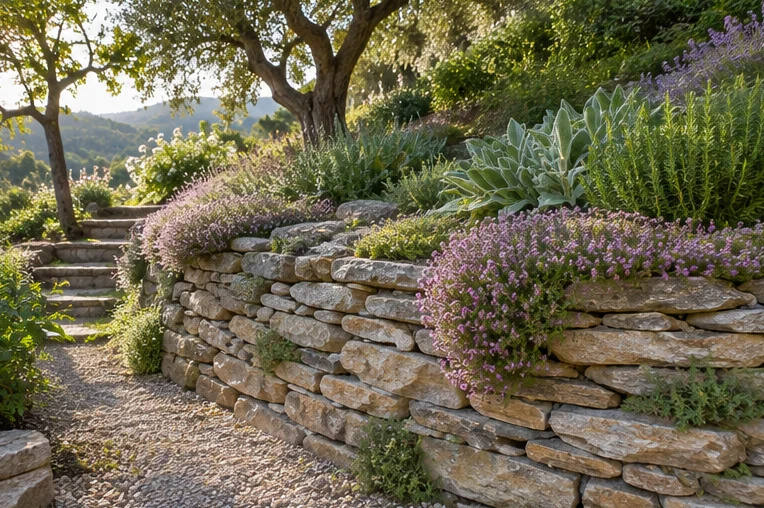
A dry-stack stone wall brings texture to a slope, especially when the stone varies a little in size and color. Plant creeping thyme along the sunny rim so it can spill over the top. Repeat the same stone in a stepping-stone path to tie the two levels together.
2. Warm up a slope with sandstone
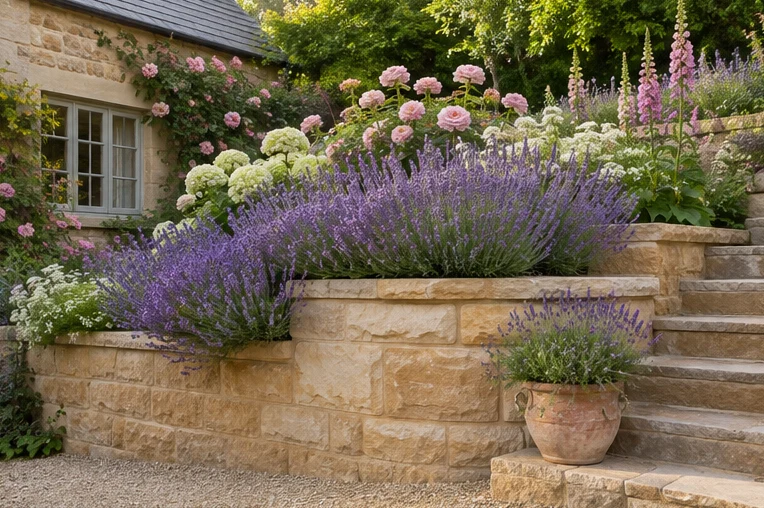
Honey-colored sandstone suits a garden with warm brickwork or a gravel path. Use it to frame a broad planting terrace, then let lavender and ornamental grasses soften the straight edge. Want a calmer palette? Pair the honey tones with silvery foliage and just one flower color.
3. Build brick terraces for a kitchen garden
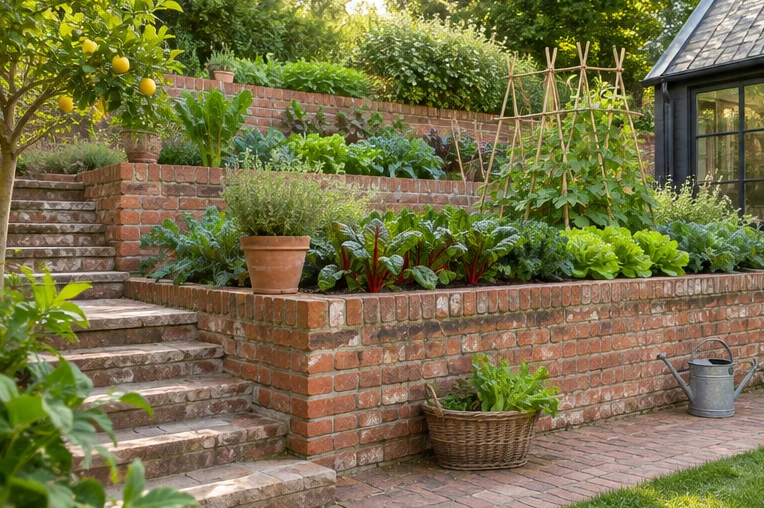
If your house already has brickwork, pick up one of its tones in the retaining walls. Give each sunny terrace a purpose, such as salad greens on one level and climbing beans on another. Leave enough space beside the beds to kneel, turn around, and carry a basket. Keep the crops you pick most often on the level closest to the kitchen.
4. Blend a boulder wall into the hillside
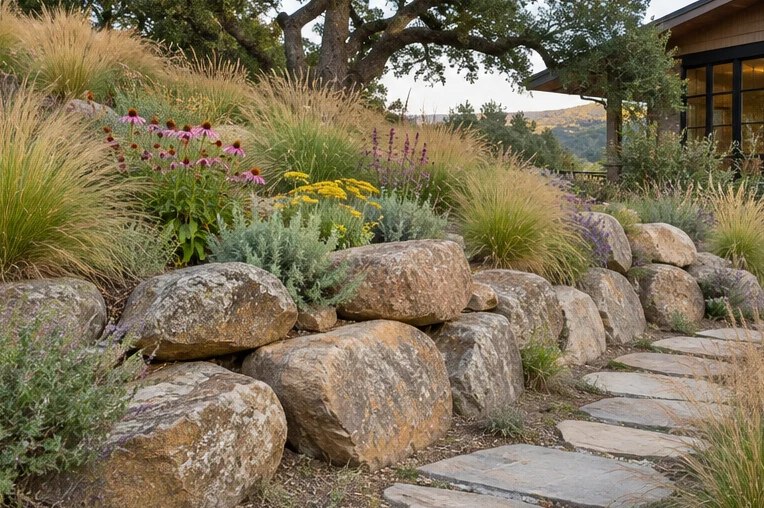
Large, irregular boulders look at home on a slope with mature trees or exposed rock. Repeat a few of your favorite native grasses above and below the wall so the two levels feel related. This idea looks especially good from a path where you can see the stones in profile.
Sloped backyard ideas on a budget
5. Use timber sleepers for a warm, simple edge
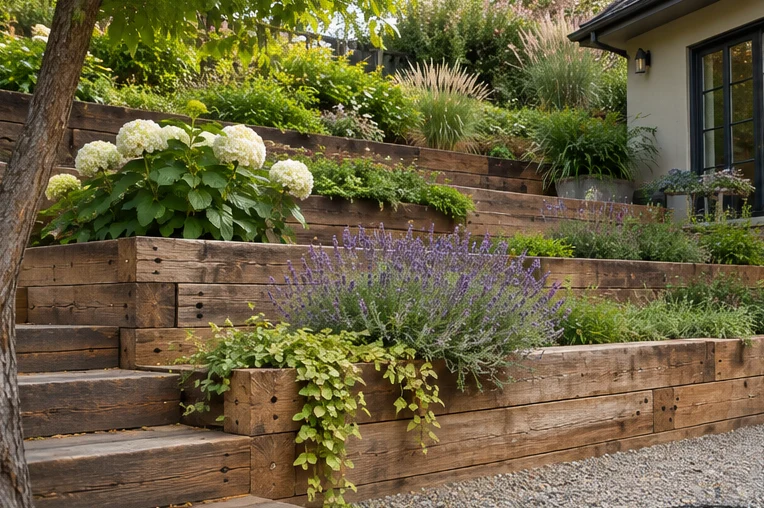
Timber sleepers give a small terrace a relaxed look and pair nicely with a wood fence. Ask for timber rated for the intended ground contact and check its expected service life. If you’re growing vegetables, verify that the product suits the intended use before buying it.
6. Pair concrete blocks with a gravel sitting area
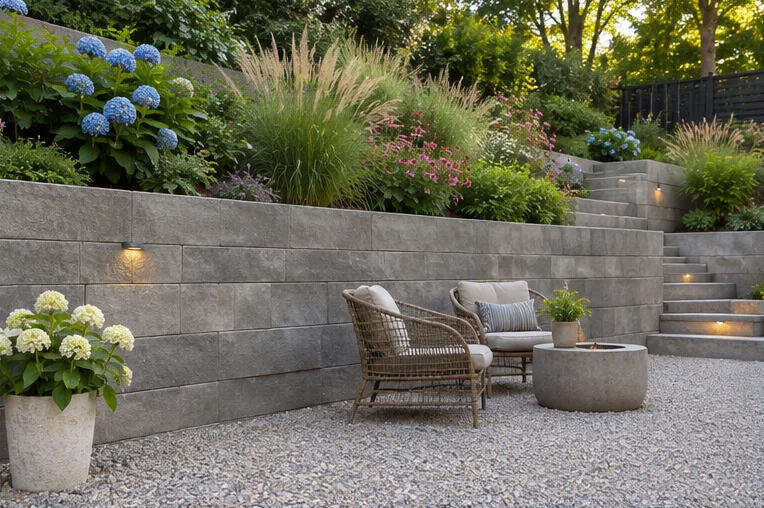
Segmental retaining blocks can give a modest wall a tidy, consistent finish. Compare installed quotes that include excavation, drainage, and delivery so you can judge the whole job. Try gravel as the patio finish if you like the sound underfoot, then test whether your chair legs sit securely.
7. Shop for reclaimed stone
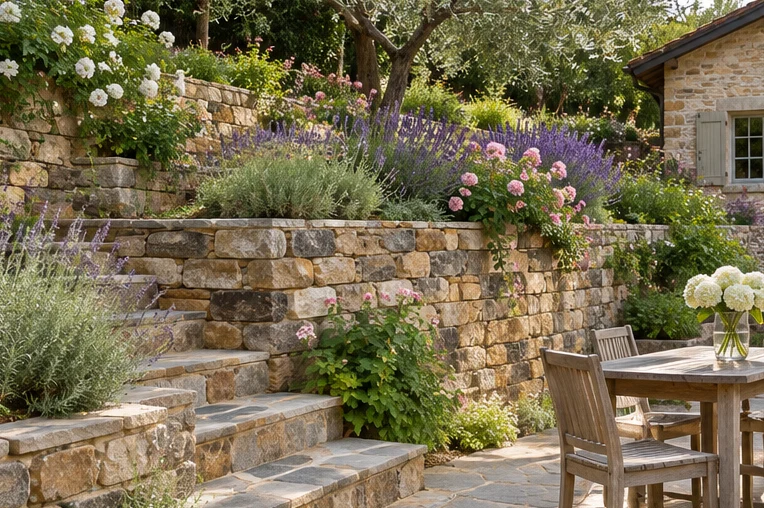
A salvage yard can turn up weathered stone with the character of an old garden wall. Check whether you can get enough compatible pieces in one batch, since a second trip may turn up a completely different mix. Factor in transport, sorting, and labor when comparing prices with new stone.
8. Retain one useful section and plant the rest
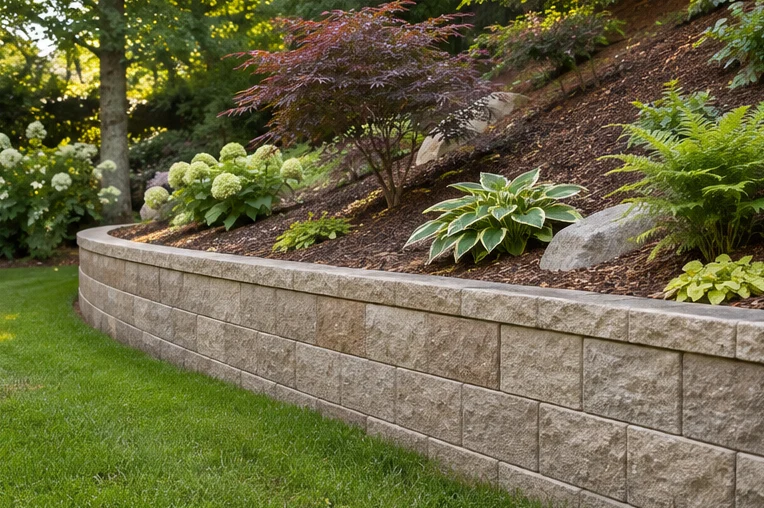
If your budget buys one terrace, put it where you’ll use it most. Would a flat spot near the back door make carrying dinner outside easier? Let the rest of a suitable slope become a planted bank, with a few repeat plants and mulch appropriate to the grade.
Modern retaining wall ideas
9. Frame a patio with smooth poured concrete
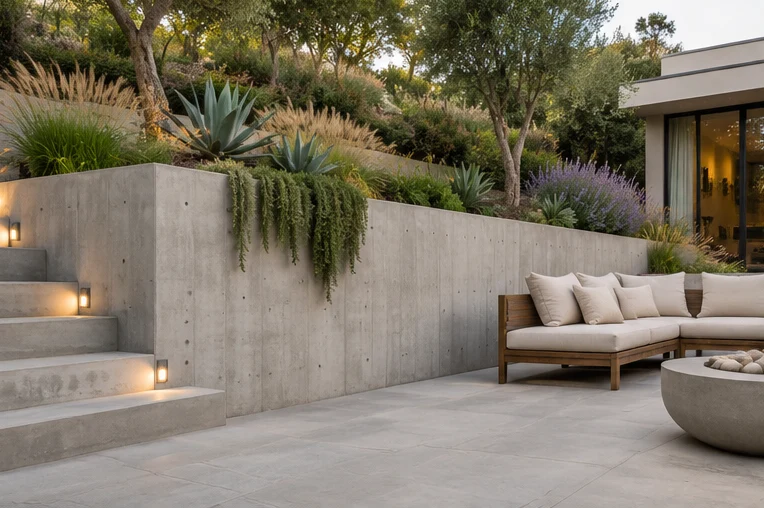
A smooth concrete wall gives a narrow yard a clear line and makes leafy planting stand out. Echo its color in the paving, then bring in wood furniture to warm up the space. Ask about the finished surface when comparing quotes, since texture and color are highly visible on a long wall.
10. Fill gabion baskets with local rock
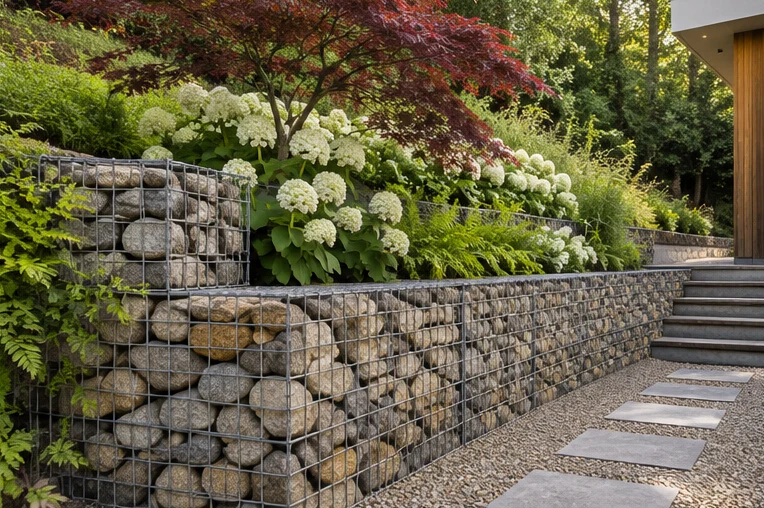
Gabions show off the color of the stone through a wire mesh face. The chunky texture suits modern gardens with simple paving and upright grasses. They can take up considerable depth, so ask an experienced designer to check the footprint and suitability before you commit.
11. Set dark steel against soft grasses
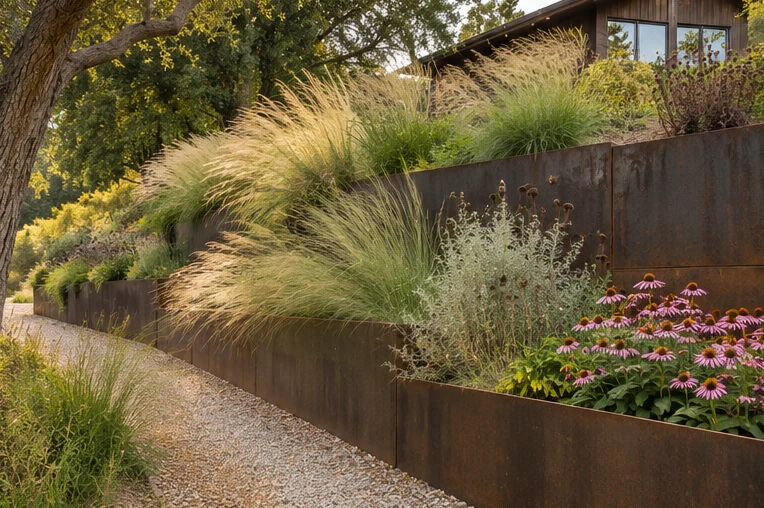
A dark steel wall can make a pocket of prairie-style planting look crisp all winter. Plant grasses where their seed heads will catch the afternoon light. If you prefer weathering steel, think about where runoff might stain the adjacent paving and ask the supplier how the finish behaves.
12. Curve a rendered wall around a bed
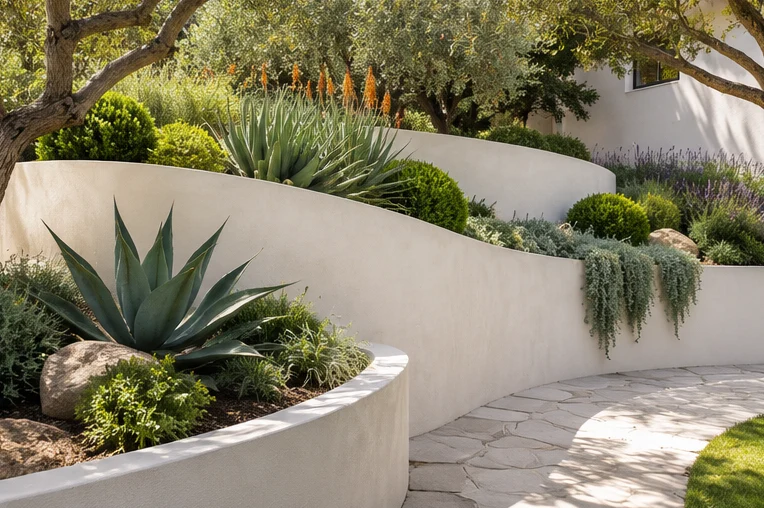
A curved wall can make a compact terrace feel less boxy. Follow the bend with a similarly curved planting bed, then use a few sculptural plants so the shape stays visible. Wondering where to start the curve? Sketch it from the window or doorway you look through most often.
Hillside landscaping with terraces and paths
13. Give each terrace a different job
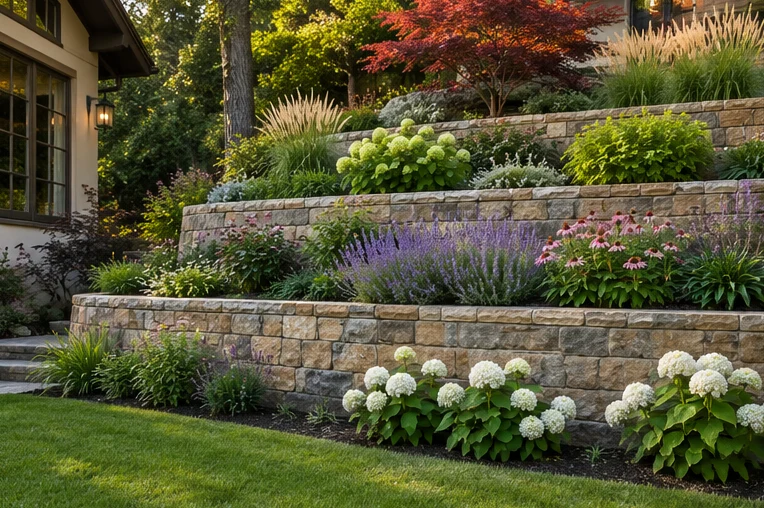
Try a patio on the first level, a planting bed on the second, and a quiet bench on the third. Think through which levels will feel sunny, shaded, or exposed throughout the day. Have the walls designed as a group, since the upper tiers can affect the loads below.
14. Put wide garden steps between two walls
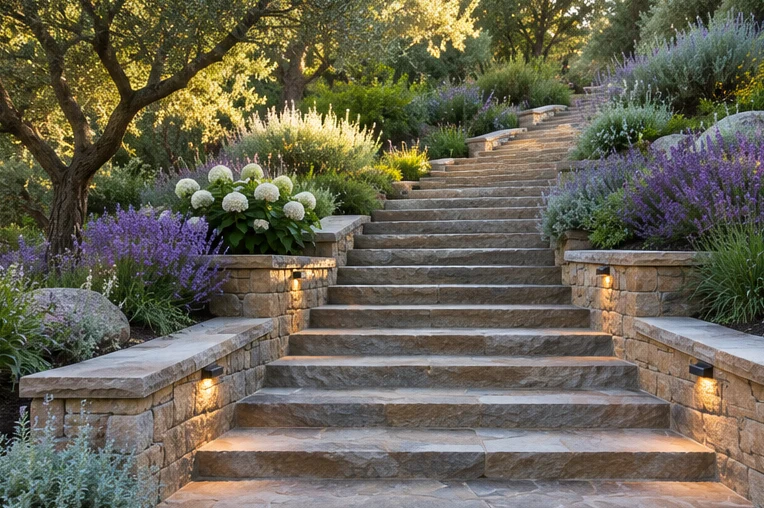
Broad steps can make the route from the house to the lawn feel like part of the garden. Use matching materials on the walls and steps so they read as one feature. Plant low greenery beside the stairs to keep the edges easy to see as you walk.
15. Make the path zigzag across the hillside
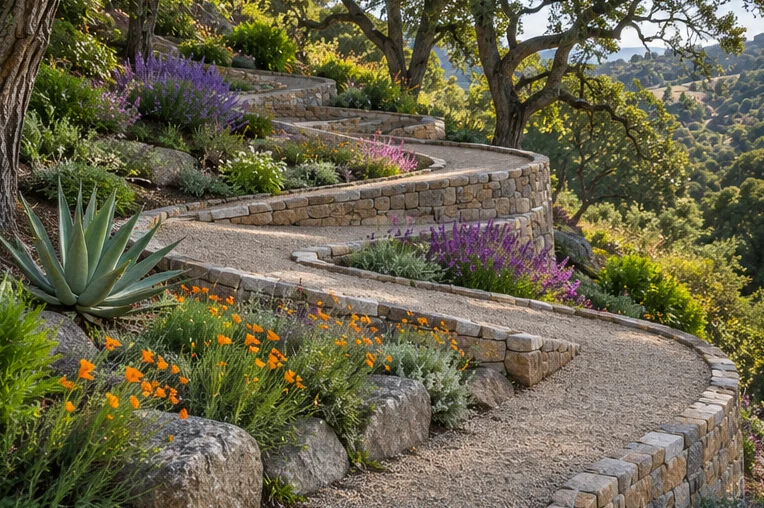
A switchback route turns a climb into a longer stroll and gives you changing views of the garden. Use stone retaining edges where the path crosses the slope and leave room to turn at each bend. If accessibility matters, have the route and gradients designed around the people who’ll use it.
16. Tuck a dining patio into the hill
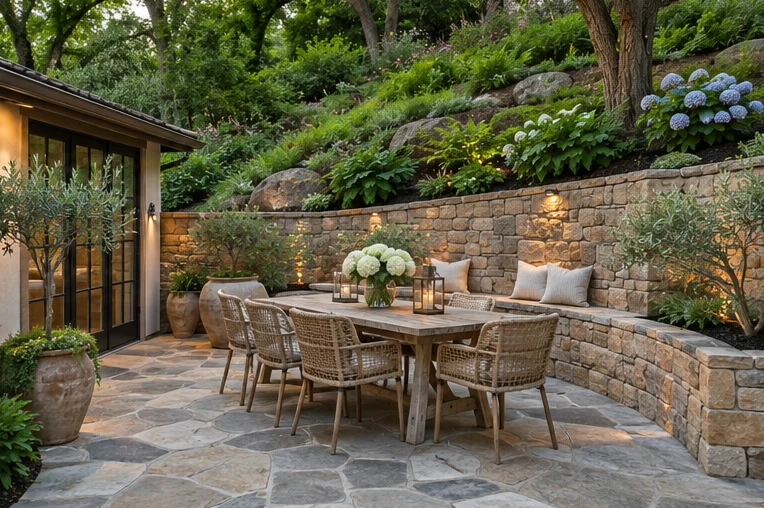
A terrace cut into a slope can feel pleasantly sheltered. Mark out the dining table and pull the chairs back on your sketch to see how much room you really need. FYI, measure the route from the kitchen too, especially if it involves carrying plates up or down stairs.
Planting and finishing touches for retaining walls
17. Create a sheltered bench nook
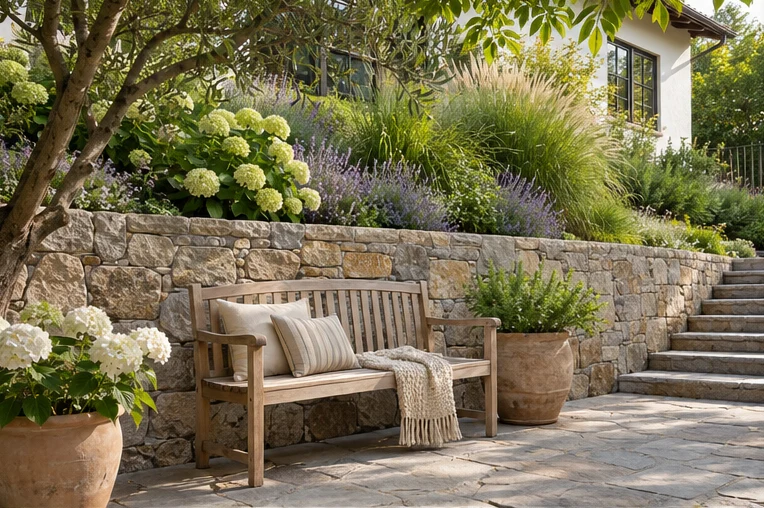
Put a freestanding bench in front of a wall where the slope naturally wraps around a terrace. Leave room to sweep behind the seat and keep the cushions away from damp surfaces. A small side table and a view of the garden can make this your favorite spot for morning coffee.
18. Let flowers spill over the wall
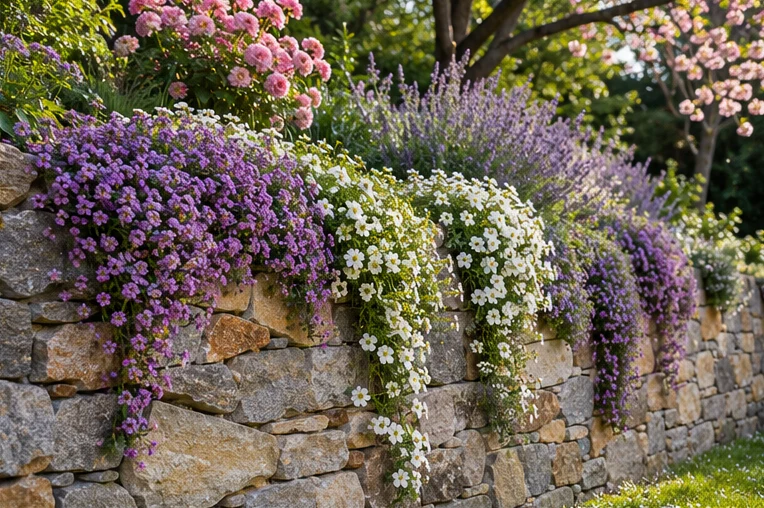
Soften a stone edge with trailing flowers such as aubrieta in a spot that suits it. Repeat several pockets of the same plant so the wall feels continuous from a distance. Love year-round color? Mix seasonal flowers with evergreen trailers suited to your climate.
19. Layer ferns into a shady woodland slope
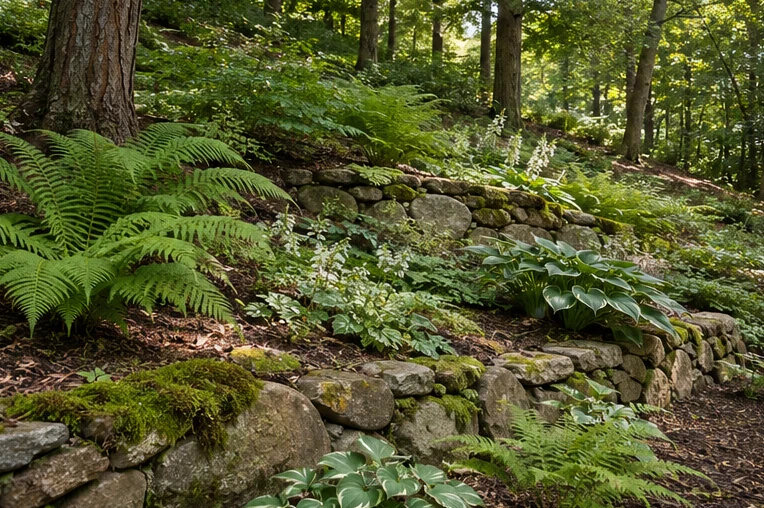
A shaded hillside can look lush with a simple mix of ferns and other shade-tolerant plants. Set them back from the steps so the fronds have room to arch. Keep one stretch of stone exposed, where its texture can catch the light and break up the greenery.
20. Light the lower wall and path
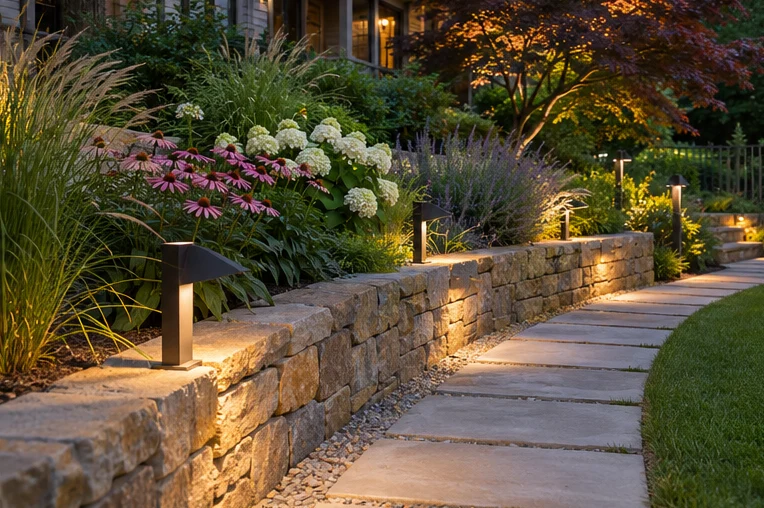
Low, shielded fixtures can highlight steps and show where a path changes level after dark. Pick a warm light and place it where it won’t shine directly into seated guests’ eyes. Look at the layout from the back door and from the lowest terrace before settling on fixture positions.
What to check before building
A retaining wall holds soil, so start with drainage and site conditions. Watch the slope during rain and note where water gathers or flows. Take a few photos from both the top and the bottom so you can show where the grade changes. Bring that information when you discuss the design with a qualified local professional, especially for steep slopes, stacked walls, or walls close to buildings or driveways.
- Loads: Flag nearby driveways, structures, and any upper walls so the designer can account for them.
- Water: Ask how the design will collect runoff and where it can safely discharge.
- Permissions: Check local requirements for permits, setbacks, and protection at exposed drops.
Further reading on slope drainage and wall planning from the USDA Natural Resources Conservation Service homeowner guide.
Pick one spot and start there
Stone can make a terrace feel as if it’s always been there, while crisp concrete can give a patio a more modern feel. The right layout depends on what you want to do outside, what the slope can support, and how water moves across it. Take a photo from your back door and sketch one usable flat area onto it. If that sketch moves your morning coffee to a better spot than the bins, you’re onto something.