10 Garden Plant Pots
A gorgeous pot can make you picture an entire patio makeover. Then you get it home and realize it has no drainage hole, weighs a ton, or dries out before dinner. If you’re shopping for garden plant pots, start with the spot where you’ll put them and the flowers you want to grow. The right pairing makes watering easier and gives you more time to enjoy the blooms.
Got a windy balcony, a shady porch, or a sunny step that needs color? There’s a container for each of those spots. Below are ten options, with flower pairings and the little trade-offs worth knowing before you buy.Table of contents
- Terracotta Pots for Sunny, Dry-Loving Flowers
- Glazed Ceramic Pots for Shady Patios
- Resin Pots for Apartment Balconies
- Concrete Pots for a Front-Step Display
- Wooden Planter Boxes for Decks and Rail-Side Color
- Galvanized Tubs for a Cottage-Garden Look
- Self-Watering Pots for Even Moisture
- Fabric Grow Bags for Flexible Flower Displays
- Hanging Baskets for Trailing Flowers
- Tall Fiberglass Pots for a Narrow Entryway
- How to Choose the Right Garden Pot
- Start With One Pot and One Good Spot
1. Terracotta Pots for Sunny, Dry-Loving Flowers
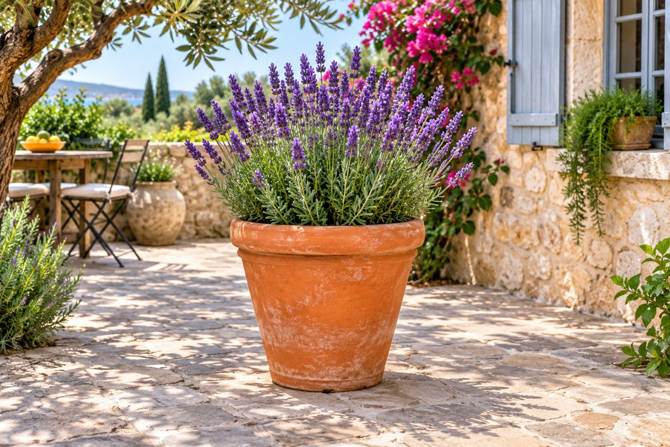
That warm orange clay looks especially good with purple lavender. Unglazed terracotta is porous, so water evaporates through the walls as well as from the top. That helps if you tend to water generously, but a small pot can dry surprisingly fast on a hot afternoon. Put it somewhere you’ll pass often enough to check the soil.
Try compact lavender in full sun with a free-draining container mix. For a softer look, group three terracotta pots of different heights and keep one plant in each. That way, you can water them individually and swap out a plant without disturbing its neighbors. If winters freeze where you live, move vulnerable clay pots under cover before the first hard freeze.
2. Glazed Ceramic Pots for Shady Patios
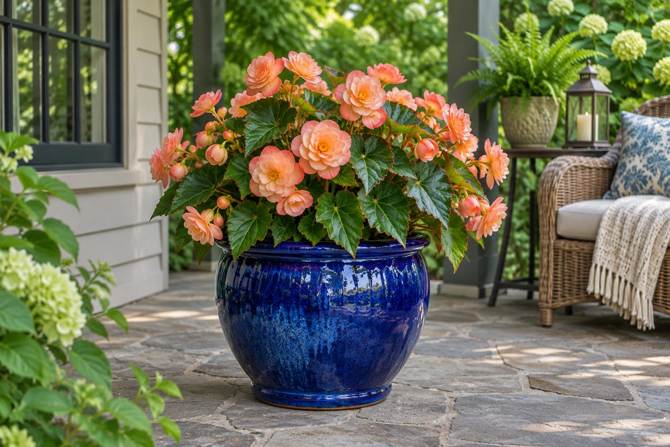
A cobalt-blue glazed pot with peach begonias can brighten a porch even on a cloudy day. Glazed ceramic generally loses less moisture through its sides than unglazed clay, which can help when a plant likes evenly moist soil. It also gets heavy once filled, so decide where it’s going before you start planting.
Look for a drainage hole before you fall for the finish. Found a gorgeous ceramic pot without one? Slip a draining nursery pot inside and lift it out to water. Let it drain before returning it to the decorative container, and empty any water that collects at the bottom.
3. Resin Pots for Apartment Balconies
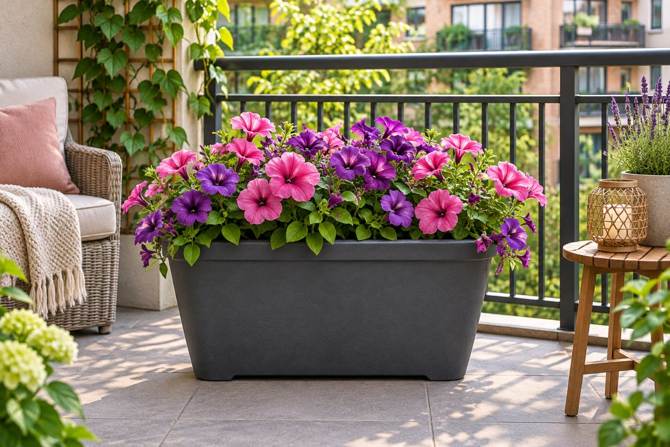
Want the look of stone without hauling a stone pot up the stairs? Resin planters come in finishes ranging from matte charcoal to textured faux stone. Their lighter weight makes it easier to rearrange a balcony as the light changes. Pick a broad, low shape for exposed corners where wind can catch a tall pot.
Plant trailing petunias where they’ll get plenty of sun. Give them room to spill over the edge and check the soil more often during hot, windy spells. If the balcony gets fierce afternoon sun, a lighter-colored container is worth considering because dark surfaces absorb more heat.
4. Concrete Pots for a Front-Step Display
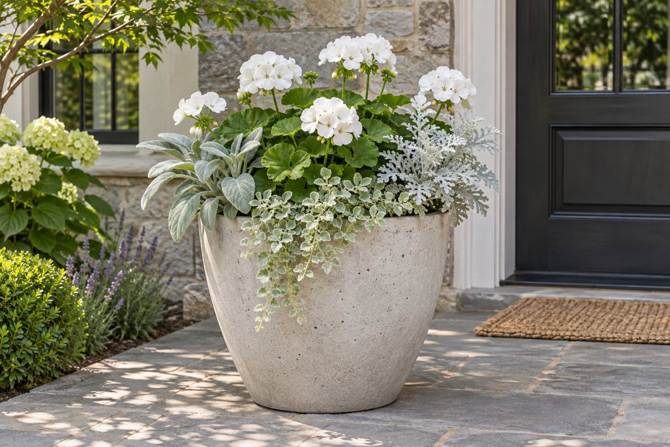
A pale concrete planter makes a sturdy base for white geraniums and silver foliage. Its weight is handy on an exposed front step, especially if the container has a broad base. Measure the doorway and walking space first so the display leaves a clear path. Place the empty pot where you want it before adding mix.
For a simple planting, give an upright zonal geranium the center and tuck trailing silver dichondra along the rim. Choose a sunny spot and check that the pot drains freely after rain. Want a coordinated entry? Repeat the same white and silver combination on both sides of the door if there’s enough room.
5. Wooden Planter Boxes for Decks and Rail-Side Color
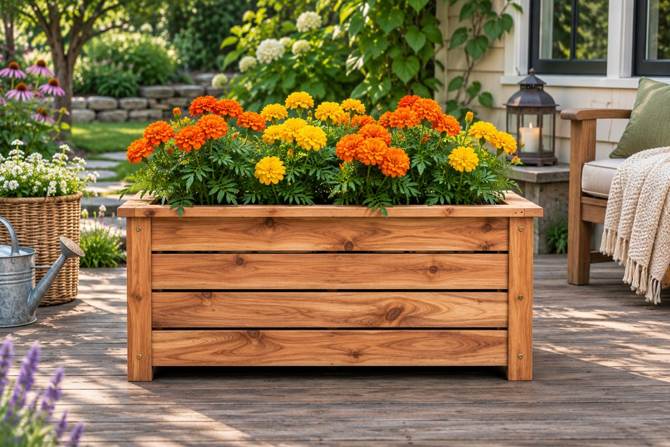
Cedar planter boxes bring a softer, warmer look to a deck than shiny containers. A long rectangular box is ideal when you want a stretch of color along a wall or deck edge. Try compact marigolds in yellow and orange, spaced according to their labels so each plant can fill out.
Check that the base has drainage openings and that the wood is suitable for outdoor use. If you add a liner, keep the drainage path open. Small feet under a freestanding box help water escape and keep the base from sitting directly on wet decking. If you’re short on space, choose a narrow box that leaves room to walk past.
6. Galvanized Tubs for a Cottage-Garden Look
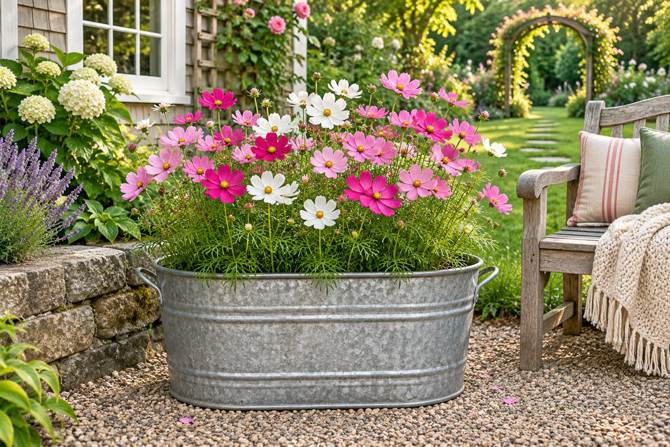
An oval galvanized tub filled with pink and white cosmos has the relaxed look of a little flower bed. Choose a dwarf cosmos variety to keep the display in proportion, especially on a breezy patio. A wide tub gives you room to repeat a few plants and leaves space for them to fill out naturally.
If you repurpose a tub, pick one with a known history and check that it can drain. Metal sides can heat up in strong sun, so monitor the mix during heat waves and consider a spot with morning sun if afternoon heat is extreme. A tub this wide looks great beside a bench, where you can see the flowers at eye level while seated.
7. Self-Watering Pots for Even Moisture
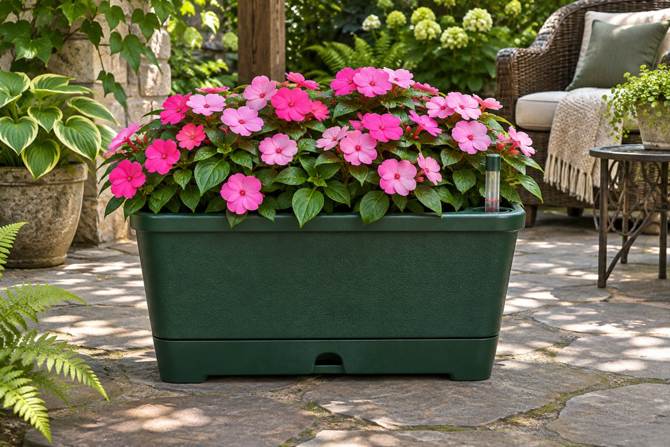
Do your containers always seem thirsty just when you need to leave for work? A self-watering pot stores water in a reservoir and moves it into the potting mix through a wick or a section of mix that reaches the water. It can help keep moisture steadier between refills. Look for an overflow opening so heavy rain has somewhere to go.
Impatiens are a colorful choice for a sheltered, shady patio. Follow the pot’s directions for the type of mix and how to water while new roots establish. FYI, reservoir size and weather both affect refill timing. Check it a few times in the first week to learn how quickly your setup uses water.
8. Fabric Grow Bags for Flexible Flower Displays
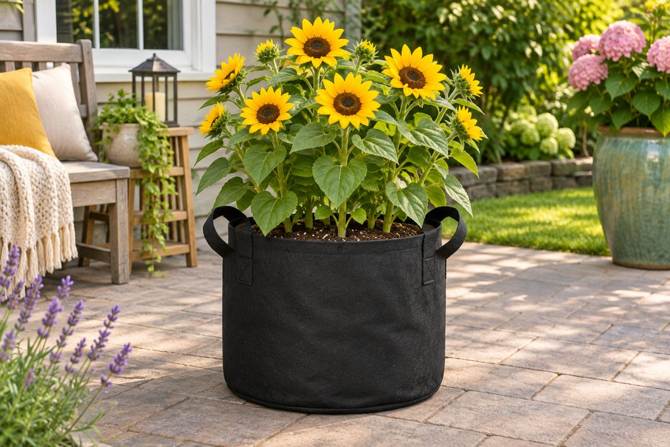
Fabric grow bags fold flat at the end of the season, which is handy when your garden also doubles as your outdoor dining area. The breathable sides let air reach the roots and allow water to escape readily. That makes them useful for quick seasonal displays, although they can need more frequent watering in hot weather.
Try a dwarf sunflower variety and choose a bag wide and deep enough for its mature size. Set it in full sun, keep the base off surfaces that stay wet, and check the mix regularly on windy days. Dark bags can look surprisingly tidy when you line up two or three matching ones along a sunny wall.
9. Hanging Baskets for Trailing Flowers
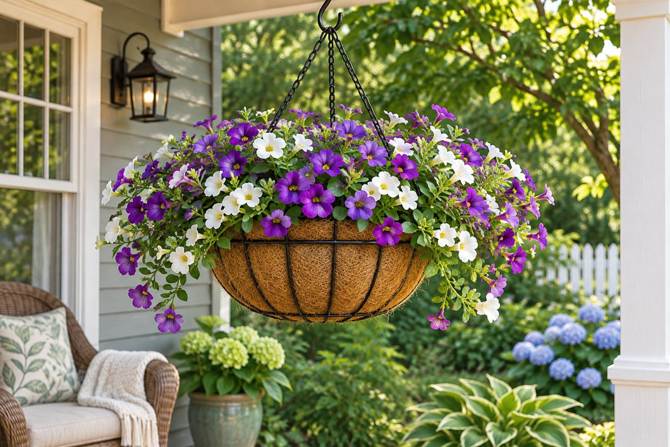
A coir-lined hanging basket puts flowers right where you’ll see them from the kitchen window or the porch chair. Purple and white calibrachoa spill over the rim and soften the outline of the basket as they grow. Choose a sunny spot within easy reach so watering feels like a quick chore.
Use a secure fixing rated for the basket’s fully watered weight. The exposed sides and small volume mean a hanging basket can dry quickly, particularly when wind hits it from several directions. Check the mix often in hot weather and water slowly so it has time to absorb moisture before the excess drains away.
10. Tall Fiberglass Pots for a Narrow Entryway
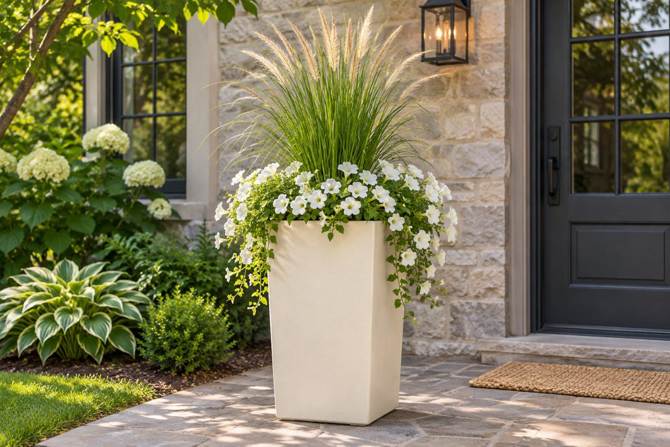
A tall fiberglass planter adds height beside a front door without taking up much floor space. A cream finish pairs nicely with an upright ornamental grass and white trailing verbena. Before buying, check the internal planting depth, since some tall designs come with a shallow insert. Match the insert to the root space your plants need.
Choose a stable shape and place it out of the strongest wind if the entry is exposed. For a polished look, set the tallest plant slightly behind center so the trailing flowers can spill toward the front. If you’ll mainly see the pot from one side, turn that arrangement toward the approach to your door.
How to Choose the Right Garden Pot
When you’re gardening with flowers in containers, a few minutes of checking can save you a season of fuss. Read the plant label, measure the spot, and take a look underneath the pot. Then picture how you’ll water it when the weather turns hot or you’re in a hurry.
- Drainage. Choose an open drainage hole or a self-watering design with an overflow. Use a container potting mix suited to the plant.
- Size. Check the flower’s mature spread and root-space needs. A tiny pot may dry out quickly, especially in sun and wind.
- Weight. Think about how heavy the container will be once it holds wet mix. Position bulky pots before filling them.
- Light. Match your flowers to the spot. Lavender and petunias suit sunny areas, while many begonias and impatiens do well in sheltered shade.
Start With One Pot and One Good Spot
Pick the flower you’re most excited to grow, find a spot with the right light, and choose a container that fits both. Terracotta suits a sunny lavender display, glazed ceramic brings color to a shady porch, and a hanging basket lets you use space above the floor. Start with one pot this weekend and see how it settles in. If you catch yourself planning where the second one will go, welcome to container gardening.